Follow Jessica

Showing posts with label medication. Show all posts

Friday, 25 September 2015

R-E-S-P-E-C-T Let's Talk About Mental Health - Comfortably


I cannot believe it has only been five days since I wrote my manic Monday post. I am feeling distinctly odd after three consecutive nights of very little sleep at all, trouble even with getting to sleep, as well as my old favourite - trouble staying asleep - which is my biggest problem.


I expect attending the judging panel for @womenoffuture (Women of the Future awards) this morning did not induce additional drowsiness! I was so excited to have the opportunity to talk about mental health and the need to end the stigma around this widely experienced and more widely misunderstood category of illnesses. I also felt tremendously grateful to be in a position to speak about it: mental health for me is one of our most critical health issues in this country and globally.


It continues to become more and more apparent that mental illness does not discriminate. Speaking today to the judges I remarked upon this. There is not one group of people I can think of - whether we think about gender, age, ethnicity, sexual orientation, nationality, lifestyle, or life, in fact - where mental illness is not present. We may have 1 in 4 people with a mental illness in the UK, but that means that so very many more people are affected by their connections to those 1 in 4. Let's think of the mothers and fathers, the wives and husbands, the children, friends, work colleagues, medical professionals and strangers who are interacting every day with those 1 in 4. We are living in a world of tremendous pressure and challenge. I would be very surprised if many people at all were completely free of connection to someone with a mental illness (themselves or others).

The paradox is that while mental illness is everywhere, silence about it is also everywhere more often than not. We still do not talk about mental health comfortably. I try to, with my known background in this area serving as an "easy chair" to slide into for this discussion, but others who are speaking of their illnesses or struggles for the first time cannot gauge the reaction of others as there are so few precedents; cannot guarantee that when they take that huge step, that leap, risking so much, while so ill, to be honest about a part of them that is unwell and needs support, that they will get that support. They might not even receive acknowledgement, let alone respect and help.


The judges asked me what I would do if I won - what I thought needed to happen - to improve things. For me, it isn't about providing support mechanisms in the work place or better NHS care (although both of these things are absolutely critical and the latter is in dire need of help, with so many people excluded from care as they do not qualify for treatment based on basic statistics. For example, did you know that if you had an eating disorder and presented with a BMI of 17.1 (i.e. .9 points below the lowest 'healthy' weight for a height of about 5'5") that you would be turned away from A&E (the ER) and asked to return when your BMI had dropped further. You would not be deemed sick enough to receive care. "Please lose more weight." = "Please get sicker, and then maybe we can help you.") 


This is what I said needed to happen, and what my focus for the next three years will be: "We need to make it normal for people to talk about their mental health." 

Why did I say this? 


Imagine if you had a very unpleasant spot on your face. You can use concealer to hide it, sure, but at the end of the day, you're very aware of a throbbing, red, sore, mass on your face that you know you'd far rather would disappear, and you're pretty sure everyone has noticed. But if you tell people about it, you're more likely to get empathy and shared stories (and recommendations of nuclear strength Clearasil), as well as perhaps the odd puerile cry of "That's gross" than have people fall silent, look down, say "Oh," and nothing more. Say nothing. Walk away.


Imagine if you could walk into the office, and on the second (or third) round of 'How are you?'s (because we know that the first is a saying hello, and the second might be a reflex action from the first) that you could say, "I'm feeling quite anxious today, so I didn't sleep that well" or "I'm feeling quite unwell mentally. I think I need to take it a bit easy today to try to prevent things getting worse." The latter statement makes perfect sense to me: you're not feeling well, and you've got to work / go to school / attend your child's school play / go and run errands. Therefore you see how you can reduce your 'to-do' list for the day so that hopefully those sniffles or early symptoms don't turn into flu (or, worse, man flu. Hor.ror.). And so your sick feeling isn't exacerbated by excessive travel. 


Why is it, then, that we so rarely hear people say anything about their mental health? Why is 'presenteeism' (which is where people show up to work with a mental illness (or any other kind of illness) but pretend that they're fine when really they are not and probably shouldn't be at work) so prevalent in our world? Why do you so rarely hear people say that they are off sick "because of depression", rather than because of a cold, flu (man flu!), food poisoning, tonsilitis, etc? 


I think the answer is, because hardly anyone says that. Still.

People don't say "I'm feeling depressed today" / "I'm feeling manic today and can't concentrate" / "I need to sleep today because my anxiety kept me up all night". People don't say it, so people aren't used to hearing it spoken of. And so people assume they can't say it themselves. They assume it's not an acceptable statement to make, and not a "good enough" reason to be absent from work.


We do - desperately- need to help people get the support that they need, but if they can't talk about it in the first place the likely outcome is that they won't seek help. They won't feel it's important/ a valid illness. And before that, they will not feel they can even mention it. 

We know that men struggle more than women to even voice struggles with stress, anxiety, depression and so on. And not talking about this can be - literally - deadly. The number one cause of death among men aged 20-34 is suicide. And this could so often have been prevented by better comfort levels for saying: "I feel very anxious." "I need help." "I am not okay." 

Gender / other factors aside, the bottom line is that people really feel they cannot talk about their struggles with mental health (even with stress). They feel ashamed, weak, less than. Like they mean nothing. 

This is so wrong. We all matter and we all deserve respect, courtesy, kindness and care - for ourselves and others. If we could change this situation and make talking about our mental health as easy as discussing a nasty spot or, say, a broken arm, shingles, or flu, this would mean that our serious and debilitating illnesses would not be worsened by the massive shame we would associate with having them. I personally have berated myself, hated myself, shamed myself and been disgusted with myself for being ill with depression. Why? Why is my illness so shameful? 

It isn't.

If I had not been so ashamed I firmly believe I would never have become so ill. I know that because being honest with my team is the same as making me feel instantly lighter. I haven't had to pretend I'm fine when I'm not, which in the past twenty years at school, university, in my jobs to date, I have done, and which has made me feel more ill: not just sick, but sickened by myself, by my sickness.

So that is where I would start. With more conversations until mental health conversations are "normal". Until people feel they can say, "Today I'm depressed." "Today I'm anxious." "I need help please." "I need to take a day or two off." And I can't wait to get that conversation going again any chance I get, and definitely at the Women of the Future summit in October. In the meantime, let's talk about mental illness and mental health. We all have mental health. Let's make it easier to make time to talk about it. Please help by starting your own conversations.


Saturday, 9 May 2015

Marvellous Medicine? What is Private Hospital Care for Depression like?My Week.

It’s the end of my week off, hospital done and back to work next week.

Tomorrow I’ll be writing another #dayinthelifeMH post, and adding it to others’ contributions, but in this post I’m reflecting on my experience of taking time out for my depression (as I knew I needed to), seeking treatment for it, and going back to normality (whatever that means – I guess work and living) afterwards.

"Okay, I need help, time to take the mask off for a while and deal with this."

My experience of hospital is of private treatment for mental health patients with a variety of conditions, and it’s private because I am incredibly fortunate to be able to work for a company which provides, as a benefit, private health insurance. I can’t talk about public healthcare for mental health as I’ve never had it (see previous post for more details). What my private mental health coverage means is I have a psychiatrist and a one-to-one therapist I see, and in-patient or day-patient treatment which I can also make use of – depending on the severity of my depression at a given point, and also a fair amount of paper work which my psychiatrist, therapist, key worker (another therapist with whom I make appropriate treatment plans) and others complete to make the case to the insurance company that I should get approval for the treatment we believe I need.

Thanks very much, I'll take all that money from you right now...I need treatment

I knew that I’d be struggling after last weekend and a variety of external matters contributing to my worsening depression, so I took the step to see my psychiatrist beforehand and ask for the paper work to be submitted requesting day care at hospital for a couple of weeks (because it’s always easier to ask for more upfront than go back and ask for more later). Luckily my case was accepted and covered by my insurer. It’s not possible for me to pay for it privately, even on what I know is a really good salary. It’s just too expensive – something like £500-700/day, which, to be honest, if I were well I’d far rather splash out on a new pair of gorgeous Louboutin shoes as a massive extravagance (and a one off, not 5 pairs in a week, although if I ever win the lottery…).

Shoes fit for any Superheroine

The fact is that I might be able to pay for just one day of care at this amount, but I just wouldn't be able to pay for more, without going into debt. Money worries have always been a contributing factor to my anxiety and depression; when teaching I couldn't afford to feed myself without using my credit card (on £17K/year with London rents and prices) and I longed for a day when I would be able to pay my bills and eat, and socialise, without getting further and further into debt. Now that time has come, I feel physically sick at the thought of going back to that place. I cannot go back there. It would certainly worsen my health – probably both physically and mentally, as I know they’re connected (and I describe below).

When Depression Debbie comes calling, she's packs a punch.

Anyway, to hospital. My experience of private day care (as opposed to inpatient care, where I would stay in hospital) is to travel to hospital from home and to attend a number of groups every day which aim to educate and support people like me going through a difficult period of mental illness, whether that be depression, anxiety, PTSD, bipolar, borderline personality disorder. I attend groups which my keyworker and I determine will best suit my needs.

Time for support group. Let's share our troubles and support one another.

The first group of the day is support group, where I and other day patients sit in a confidential environment to share how we are feeling, what issues we’re struggling with that day and what we think we will do about them. We have to go around the room to introduce ourselves and ‘check in’ with our state of mind and feelings. This is helpful since many people are ‘new’ to the group each day. This really all comes down to insurance – if you’re covered for a particular day you turn up that day but not on days when you’re not covered. In the last week I met at least twenty people I had never seen before (and a couple I already knew). We are all taking what we can get. The people I met varied every day, so there’s always something new to talk about.

Time to fight our illnesses together. Pow!

In the hospital environment, the support group is guided by a therapist – in our case the therapy manager – and this helps us to dig a bit deeper with the problems that we’re overcoming, whether our illnesses have been triggered by a family matter, work, other pressures or a mixture of all of these. I love support groups because I don’t have to take notes or apply particular therapeutic techniques, but sharing with others is a kind of release, and hearing and participating in group discussions about issues often help me to unpick some of my own personal struggles and find that I am not alone or that I have new options I had not previously recognised.

Hello Demon Difficulties. Please go away.

The other groups are harder. This week I attended a schema group, which educates us as to our core needs as “newborns”, and how our core needs (whether met, overly met or not met) lead us to ‘maladaptive’ coping strategies – i.e. things that we do to compensate for whatever our upbringing and childhood environment was like. For me there’s a lot to learn about the way that I behave now as an adult which links back to being bullied as a child and feeling isolated. It is fascinating and useful, but it is also very hard to think back to those times where I was in so much pain and had no means of understanding or coping with the situations into which I was placed. You can make friends at hospital - because you may bond with others. It's a matter of choice, though, because if you do make friends you often talk more and more about your and their struggles, making the experience more intense and potentially tougher.

Memory Lane. Tough as nails and stronger than steel. And ever growing.

Other groups look at cognitive behavioural techniques (conscious recognition and rational working through) for anxiety, depression, and other important areas like anger management and assertiveness. Practising recognising our negative feelings and the ways that we automatically respond to them, and hearing how to apply different thinking patterns to try to retrain ourselves is what we do in this group.

I can see you, negative thoughts. I'm ready to fight.

For example, if I text a friend and don’t receive a text back, the lonely and isolated, bullied child in me might apply an automatic response, linked to our old ‘fight or flight’ mechanism. I don’t receive a reply = I’m somehow in danger of getting hurt here; = My friend doesn’t like me anymore; = I’ve done something wrong… and so I start to become anxious because of these worries and start becoming  depressed as I wrack my brain for potential incidents in the past where my behaviour might have caused the person to dislike me. (The first – worry – leads to a build-up in anxiety, as the physical symptoms like a racing heart, feeling sick, feeling dizzy may strike in addition to the ‘cognitions’ or thoughts that I described above leading to the feelings – shame, guilt, fear, etc. The second – rumination – leads to increased depression and may include some of the physical symptoms above, but also add sluggishness, a feeling that one is hopeless, a failure (more shame, more guilt, anger at self and others, fear of never getting better.)

In this case, 'A' is very much for 'Anxiety'

When I read the above and tell you that attending these groups leaves me feeling exhausted, I hope that you are not surprised. It’s quite hard for me (and I think it’s hard for others) to acknowledge in the first place that I need help of this level. Unfortunately the part where I get help is far from easy, as I look to past events and their effect on my feelings and depression, and I have to recognise them and confront them in order to start working through those feelings and events to feel better.

I went through this on Tuesday, Wednesday and Thursday, always attending the support group first thing, and following this with other groups. By the end of each day I am drained and sad, probably sadder than I was when I arrived, because it is hard to go through things from the past. However, the alternative – not to go through those things – not to challenge my past and my negative thinking – not to address the deep depression that is overwhelming me – is not to live. And since I choose to live, I choose to get help, even though it’s hard and afterwards I curl up in my bed under the duvet, with pillows all around me, and I tune out with Netflix or my Kindle, or with a radio programme, and perhaps go to sleep for a while.

Support group. Where we share and sometimes laugh together. 
It's good to know I'm not alone.

I took Friday as my last day before returning to work. I didn't go to hospital because I wanted some time to do more tuning out and re-acquaint myself with the land of the living, thinking a bit about work, doing some food shopping, posting some parcels, paying bills and so on. I also spent a good deal of time cleaning (which is surprisingly therapeutic as a physical activity that allows me tune out) and resting in bed with a book. It's also just good not to think about myself in such a focused way - not to work on myself anymore. It's a relief to stop that and necessary in order to dip into a week of treatment and then return to work immediately. For me, Friday was the opportunity to start back into life and lead into the weekend with rest, and with those sad, terrible thoughts not exactly put away, but left for a while to get some air and be revisited in a smaller way at a later date.

And time for sleep while that works away...

I now feel like I’m ready to work again, and I feel rested, and heard. On Tuesday I felt hopeless; on Wednesday more so; on Thursday tired by the whole thing, and on Friday relieved to be away from all that difficulty, but able to recognise its value. I could see the sun and smile quietly at it. I could walk and appreciate the wind (and drizzle!) on my face and be in the world without anger or self-hatred. It’s a step forward. I will keep stepping forward. 

Time to step forward.  And put my head band and shield back on. Obviously.

Tuesday, 17 March 2015

Mental Illness Does Not Equal #HeadClutcher - Get The Picture?!

As if to prove the point, I even had to have someone else take this picture
because I can't even take a selfie with both my hands in this position!

Today is a great day because the #getthepicture campaign has been launched by Time To Change in association with Mind and other mental health charities. I was blogging away yesterday in a post I will no doubt publish sometime in the future (because it's about anxiety, and I seem to get that quite a lot) but I couldn't feel passionate about writing about my continuing struggles to feel well and, to quote Star Trek to live long and prosper.

It's hard to describe what life is like if you're suffering from a long term mental health condition, because we cannot actually experience life as someone else, however much we try to find similarities in our experiences to join us together. When I was a teacher we used to talk to the children in our English classes about empathy as 'putting yourself in someone else's shoes'. Now, aside from practical and logistical challenges (wrong shoe size, width, or the possibility that they're just f***ing ugly shoes) we cannot experience any kind of illness as another person experiences it and know that we are feeling exactly the same thing - from headaches to heel aches from those darned shoes, we will never know what another's pain feels like, only our own.

Erin's right. There is never an excuse for ugly shoes.

When it comes to illnesses, it's fairly obvious when some people are suffering in a particular way. For example, you may see that someone has a cast on his arm, or a boot on her foot. Or stitches in a prominent position. These are all physical manifestations of a medical condition. It's lucky for the media that these kinds of things exist as their life is very hard. Yes, they have to search through literally one or two image searches to find a perfect picture of someone with a broken leg to write their report on a skiing accident or one of those better accidents where you have it at work and LawyersForFreeExceptWhenWeWinAndFleeceYou.Com come and help you to sue your employers for leaving that big yellow sign saying 'Wet Floor' right where you could trip on it.

"You're going to charge me how much?!"
Appropriate example of a #headclutcher shot

For mental illness it's rather different. (And I shouldn't forget about the hundreds of non-mental-illness conditions that are also invisible.) You can't always see on the outside what someone is feeling on the inside. There are guidelines on how to try to identify when your friends, family or colleagues might be struggling to maintain their mental health you may have seen, some more helpful than others... such as frowning or looking angry, increased frown lines or visible signs of stress, looking sad, tired or being tearful or frustrated easily. (I know, some of these sound a bit ridiculous. It really is all you might have to go on...or nothing at all.)

Bradley Cooper shows us that people with mental health challenges
also sometimes wear bin bags to exercise in. I bet you weren't expecting that!

But that cousin or co-worker could just as easily been dumped recently, seen Still Alice at the movies or stopped using Protect and Perfect anti-wrinkle serum as be depressed. There are no hard and fast, tell all signs that someone is definitely suffering from a mental illness.

"Back off buddy, those wrinkles don't mean a thing."
If you say so Jen. If we looked like you we wouldn't even care about photoshopping.

This makes things tricky for our dear friends in the media, who want everything to be black and white. Is Kim Kardashian's bum too big or not? Well, the answer to that is, both, or one of the two depending on what day it is and how many hits the sidebar of shame is getting on any given day. But they can always accompany this with badly taken pap shots of Ms Kardashian's shapely rear as evidence for their badly written articles peppered with the odd typo and grammatical error in the writer's haste to get Ms K's ass hot off the press, if you know what I mean.

Spot the difference. Yep, it's the addition of *clothes*. you got it in one.

Luckily for the media, Time to Change has come to the rescue. There is no longer any excuse for using pictures of people who are gripping their heads for no apparent reason as representing the mentally ill. You know that cannot be true after all, I mean, I didn't type this post with my nose, that would have taken all day. I typed it with my hands, while feeling moderately anxious because yesterday was one of my 'no sedative' meds nights, and because I'm wondering how much more carrot juice I can drink to keep me from becoming a hippo on my weight-gaining antidepressant pills, and whether actually a Marks and Spencer's chocolate chip cookie is actually calorie free if I eat it standing up. (Course it is.)


Time to Change has launched its campaign and with it a whole host of media images which show people struggling in a more realistic way. They are for the media to use, and are endorsed by the UK Picture Editors' Guild. They worked with people who suffer from these illnesses and medical professionals, among others, to represent mental illness in more sensitive, life-like graphics. I'm guessing none of them will show up in the Sidebar of Shame, but that's only cause KimmyK wasn't available to model for them. The glorious Mr. Fry, though, was, and here he is, showing us all how it's not done. So, media, you're welcome, Time To Change has helped you out. Now #endtheheadclutcher already. And those of you media types who are struggling to keep your mental health in good nick can breathe a sigh of relief, because no one's expecting you to use your toes to type anymore as you clutch your head all day at your desk. See, everybody wins.


Tuesday, 6 January 2015

A Fat Lot of Good: January Drear and Diets

I made the catastrophic mistake of weighing myself on Monday. First day back at work and I added to that joy with a painful arm and a horrific number on the scale. And as the writer of this blog, dear reader, I choose to abstain from printing it here. Just know that I'm currently limited to a wardrobe selection of pyjama bottoms that have no elastic left in them, and a reindeer onesie I am supposed to put away after today according to Twelfth night traditions. Oh and some leggings. I am a wearer of leggings now. And giant sweaters.


Yes it's been a stellar week so far. I'm officially on a diet and I know that ahead of me I have weeks of it to come if I have a hope of shifting all the stuffing I have oh so casually stuffed myself with. And I'm delighted that the gabapentin I'm taking as well as the other pain medication and the antidepressants are such a tonic to this diet, for their potential to make people like me, who are, quite frankly, depressed enough without their help, thanks, able to help us to gain weight. It's an overused word, I know, but, frankly, and not without my classic British sarcasm: awesome. And now we add to it the fact I mentioned in my last blog: that another operation on my elbow is needed, meaning more time without being able to swim (it's not the right kind of physio) and only walking as the exercise option. Or cleaning. And let's face it, I'm not writing a blog about being a domestic goddess here. The house is tidy because I'm living mostly in bed.


So, "We get it," I hear you cry. "You're unhappy. It's January. Get over it. (Whatever the 'it' is you wanna focus on. Just get over it. Already." And okay, I should.) But really, this is the best time of year to embrace being miserable. We're all at it. I can scarcely rouse myself from my bed to turn on my laptop in the morning without my eyes moistening at the thought of work. They stayed like that all day today. Moist. Moist when I ate my Rice Krispies (being carefully calculated as part of my get-thinner-even-though-you're-on-weight-gain-meds diet by myFitnessPal). Moist as I went for my lunchtime walk listening to Hard Times (depressing month cause for depressing literature) and moist throughout the rest of the day. Moist now.

Ugh Pills. This is what mealtimes feel like.

Why is January so hard when I can hardly tolerate Christmas and find New Year's Eve stressful too? I would have thought I'd be happy to have it over with. Perhaps it's all those additives and the hangover (both booze and booze-free) from the partaking that has left me in this sorry state. But it is a pretty sorry state. Thankfully, everyone else is miserable too, or so it seems. If August is the silly season for news, January is the dreary destination for deadly dieting and depressingly downcast outlooks. People are giving up or cutting back on the booze (me too), cutting the calories (me too) and getting on the treadmill again (not me too, worse luck). I spent most of yesterday wondering how much of my medication I could forgo for the sake of my figure (I'm an idiot. My arm hurt a lot today.)

Now I'm just saying roll on April. Which is the cruellest month, but by which time I'm hoping I won't need some kind of fat sucking device for my normal jeans to fit, and my darned elbow should be screwed firmly together and actually behaving itself. (I'm giving my body my sternest teacher-like stare.)


The only odd thing I can say amidst this depression is that I can read the most sad and haunting things at my bleakest moments, because it's not the sadness or the despair which is the worst time, it's the feeling that this will never end, and since it may never end, and there's a numbness, why not try poking myself with something really tragic. At twenty one I watched The Ice Storm in such a state. It was the perfect film to get over with while so morose. Today I am going to read a new book on depression, and think about last year when I was travelling back to New York to erase my life there. Unfortunately I think the real life element of the latter is too close to actual trauma, so I will look for fictionalised versions instead. Safer. Distant.

Not an answer to the question: "What's a happy film we can watch?"

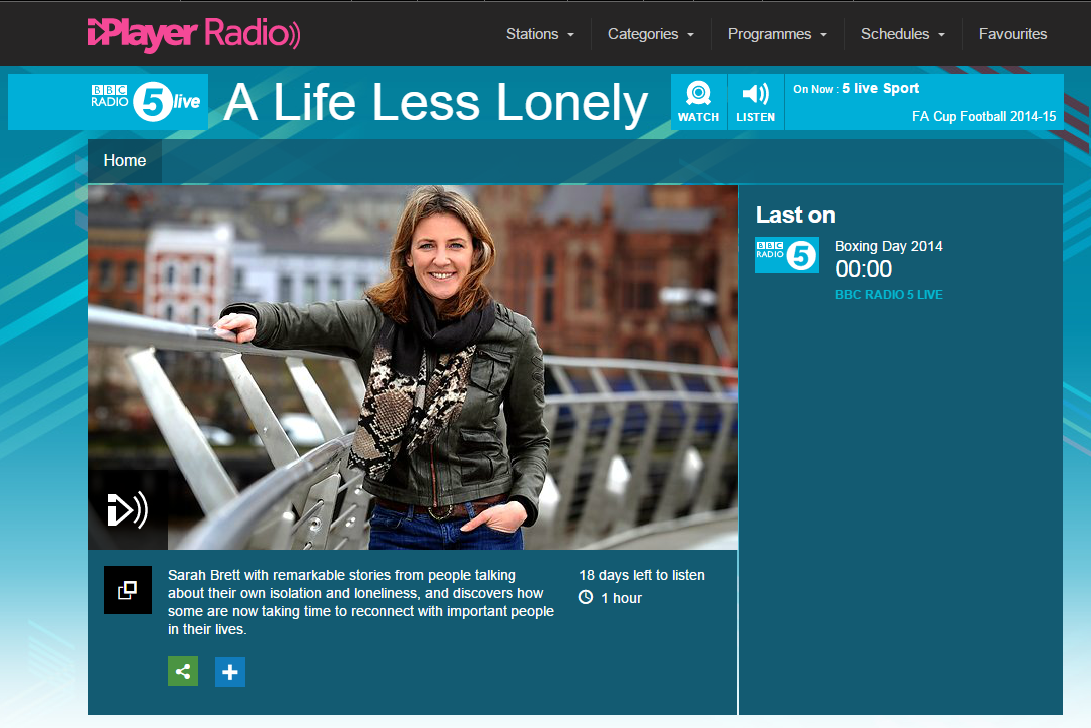
I did talk about New York though, and being lonely there while I lived there, recently, so if you want to join me in embarking on exploration of a topic that's important, though not perhaps one to get out with the Christmas crackers or happy birthday music, you can listen to me talking at about 22 minutes in about loneliness on Five Live. They put it on at 00:00 on Boxing Day. I.e. in the small hours when we were all stuffed with turkey, it was already time to stop being cheery (or fake cheery) and start being dreary.


What I think we need is a #joinin for January. In fact that's it: #joininjanuary. Who can come up with the most sardonic tweet for jaundiced January? I challenge you, reader, to join me and cheer me up by telling me that your tape measure doesn't go round your waist either, and that you've got your old step out from behind the wardrobe / from the greenhouse where you were using it as a shelf for pot plants. If you've managed to slice open your finger as my friend Lucy has whilst being middle class using a mandolin (it's a dangerous way to live, the middle class life) or similar, then #joininjanuary. And by the way, I'm still eating a few nice things on my diet hoping not to fall off the wagon before the pounds fall off first. So thanks, Marks and Spencer, for keeping your Extremely Chocolately Roll in stock. I may only have a sliver, but it's enough to make my eyes water. In a good way.

Friday, 14 November 2014

Alice Threw The Looking Glass: Misconceptions of Mental illness and Depression - My Five Cents

“I'm not strange, weird, off, nor crazy, my reality is just different from yours.”-- Cheshire Cat

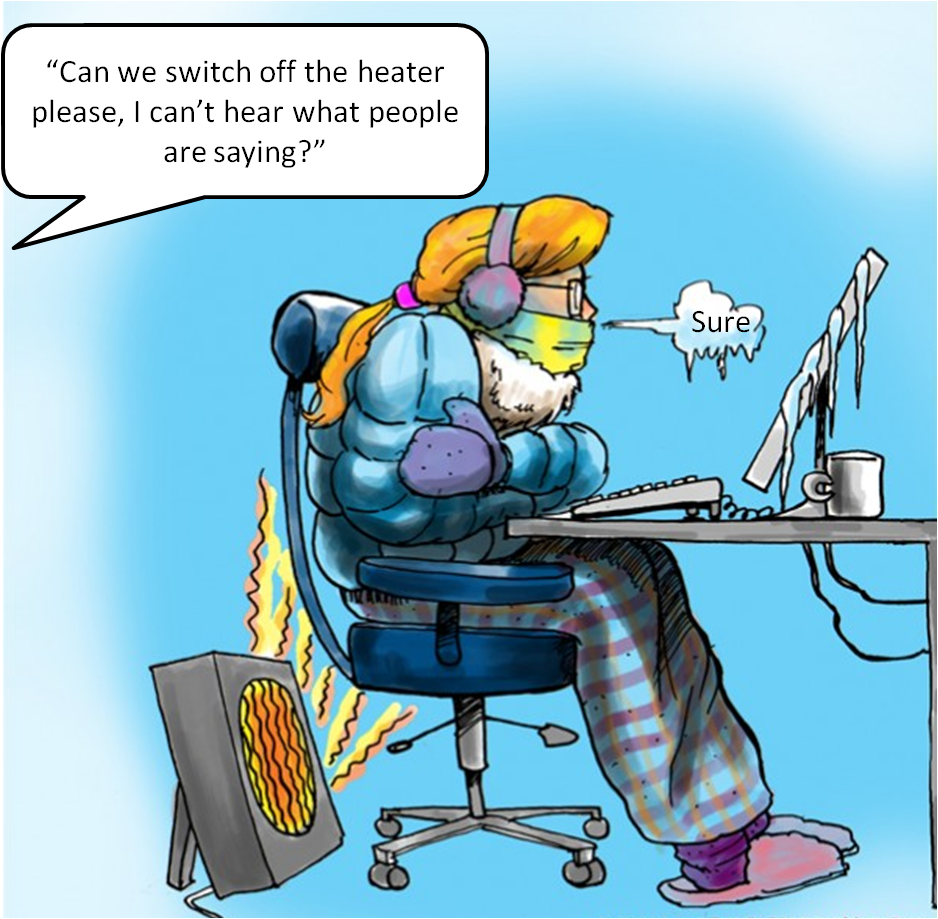
I joined a creative writing group last week, which is ever so conveniently located only moments from my front door, so even a broken soldier like me can shuffle along with my massive extra large Tesco hessian bag filled with pillows and cushions of various sizes to see me through the session. One for my arm, which is a pain (literally and figuratively) and aches in the cold, when I move it, when I don't move it...you get the picture; another two for my derriere and my back. It's held in a church hall where we have to choose between the heat provided by a tiny, robot-shaped electric heater in the corner - but no ability to hear what anyone is saying or reading aloud - and my usual experience of church halls which is: chilling to the bone, no matter how many layers you're wearing.

Heater on. Alive. Heater off. Dead but trying to listen anyway.

The course focuses on non-fiction and this week our home work is to research something 'we're interested in' and write a 'short' piece about it. We did receive feedback on our chosen pieces. I - predictably - opted for mental health in the work place to enable me to bang my apocryphal drum a little louder to a new audience. This provoked feedback from the teacher that I could of course choose several aspects of this - mental health in general, stress, depression, different eras of work. After three minutes or so of this feedback he considered himself satisfied and moved on.


I neglected to say that Mat is doing this course with me, and it was to him the focus of attention now turned. He explained, "There have been many popular science books addressing the figures and ideas from the scientific revolution of the 17th century aimed at mixing biographical details with scientific facts in a way that is both educational and entertaining. A similar project would envisage taking the ideas of figures at the time more usually considered as philosophers - Descartes, Leibniz, Locke, Spinoza, etc. - and looking at them and how their thinking was revolutionary...". To this the teacher said, "Yes, that sounds very interesting," and moved on. (Translation: "I've no idea what you just said but it sounds erudite and complex so I'll let you get on with it and I'm too afraid to ask for more details.)

(And don't be afraid to talk to Mat about philosophy. He'll keep explaining till you get it. I promise.)


This week mental health has once again featured quite prominently in the news. There have been several articles about depictions of the mentally ill on television - both in dramas (like Homeland and Eastenders) and in Broadmoor, a new documentary on the most severely mentally ill people in the UK, some so severe that they have committed terrible crimes and will never be able to be released, such is the gravity of his illness (it's a male institute). The latter programme was only made after five years of waiting and negotiating to be granted permission for cameras to enter the grounds. I watched the documentary and was afraid it was going to make people afraid of mental health again - thinking that everyone with some sort of illness related to mental health was the same as those depicted (though they varied in the degree of severity / type of illness). Let me clear this up right now. No - we're not all like that.

Carrie in Homeland has bi-polar disorder.

All of the above prompted much commenting in the UK online press, which led me to consider how I perceive myself in society, how I think society perceives me, and what I think the misconceptions are that I struggle with as a result of having (and now recovering from) a mental illness.

Here is a lovely cartoon of misconceptions of mental health, challenged. Then you can read mine.

Yep.

My top five pet peeves about conceptions of mental illness, from personal experience.

1. "Just get over it." Depression is a real thing, not something in my head whereby I can just 'Pull myself together' and instantly bounce back to my well self from. It also can't be cured in twenty minutes with the right medication. For me - and this is my opinion, not that of any medically qualified person - I need some help from medication at times combined with cognitive behavioural therapy (CBT) to help me to recover. Most of the time I'm fine. And I am trying to be better - all the time. I am not giving up and sometimes it's really bloody hard, thanks, even though you can't see the blood, I promise you, it is!

2. "Your can't possibly be any good at your job if you've got a mental problem." I can still do my job / function perfectly well when I am well (even though I've had depression in the past / still have it as a condition). I'm doing it now. I'm doing it part time, admittedly, because it just so happens that I fell, not down into the rabbit hole but down two stairs and have damaged myself severely so that I need to recover and rest.

3. "Medication doesn't work" OR "Medication is all you need." I need both medication and CBT as part of my recovery process. When I take medication because I need it to be well, I can also do my job perfectly well. And sometimes, yes, I do need medication. I need it to help me to rebalance my brain's chemicals somehow, in the same way someone with a cold needs Sudafed to help a congested nose feel better. It works for me. So I do it. and I trust my psychiatrist. Incidentally, there was some horrible psychiatrist trolling this week. "Psychiatrists aren't real doctors...BLAHBLAH". Really? Mine has several other previous medical qualifications and I can assure he is probably the most qualified doctor I've ever met. Finally, when I see a psychotherapist to talk through various topics that is part of the recovery process and does not mean I cannot do my job well.

4. "Depression is just like glandular fever, ME or Chronic Fatigue Syndrome." I do not have M.E. or Chronic Fatigue Syndrome I do have a symptom of depression which means that I become extremely tired by things that I find hard. I am a classic overachieving under-confident person, perfectly formed for the world of consulting, banking etc. As if hatched from a perfect consulting bird egg, here I am, ready to over perform but oh so unsure at times, and the need to over-perform - to have what is called 'unrelenting standards' of myself, makes me sometimes absolutely knackered before I've even begun. It's a bit like having to go and have a lie down at the thought of doing a little washing up, because you want to do the washing up the best, better than anyone has ever done it before, ever. Yawwwwn. Still, if you look at previous blogs you can see that I've gone running when I've been depressed, and delivered on some massive pieces of work while ill, so I really feel this is not the appropriate way to think of me.

Unpredictable emotions, and sometimes no emotions. 

5. "You're always smiling and laughing, you can't possibly be depressed." I can still enjoy things while being depressed. (Or I might be pretending to, true.) But this is a really odd one. I don't understand myself why sometimes I'm crying uncontrollably (well, except while watching 'Up' at Christmas, but then EVERYBODY is crying when they watch that movie) or why I'm laughing. I'm always laughing when Mat makes me laugh because he does silly things like balancing spoons on his head or pulling funny faces. Or I put Mat's copy of Locke's 'Essay Concerning Human Understanding' in the bin, again (hate, HATE Locke) and find this endlessly amusing. But the next minute I can feel the empty feeling inside, the tiredness, the stupor and feel stunned by it again, like a deer struck with a dart.

I laughed and laughed this week when a lunch with friends went from disastrous to hysterical. My friends, two sisters, both thought they were meeting me this week, but then it turned out both had a different date in their diary. I was faced with lunch with each of them on consecutive days, or neither and a future date in January. I suggested Wednesday, which - miraculously - worked out, although I couldn't eat as I already had a work lunch to go to. The restaurant in Waterloo we went to shall remain nameless. Oh, alright then, no it won't. It was Topolski's and it had possibly the worst service and worst idea of menu / timings I've come across in a long while. (I did live in New York, yes, but I'm back now to the reality of British service, and I know that it still, well, sucks.)

Topolski - great artist. Shame about the service in his namesake's bar.

(Them) Yes, we had to come to the counter to order [There's no one else here.]
(Them) No, we couldn't just have bread [Bread clearly existed in the place as it was served with other dishes.]
(Them) No, we couldn't have fresh mixed juice as the juicer was broken. [Losers.]
(Them) No, that part of the menu's only available after 5 and before 5.05pm. [Points to 90% of menu]
(Them) Yes, I can reheat your cold soups for you. [More waiting.]
(Me) Yes, I can tip you nothing and smile directly into your eyes while doing it you dreadful example of waiting staff everywhere.

Luckily we hadn't seen each other in yonks so we were chattering away happily as all these foibles went on around us.

Unfortunately all this fun means I need to spend more time this weekend doing more research on mental health. I've opted for mental health in literature and drama so watch this space for that. In the meantime, think of me changing all the time. That's what I'm doing. That's what we're all doing. Ageing, growing (in whatever way). We're changing. And since I wrote that I've changed again, somehow.

“I can't go back to yesterday because I was a different person then.”