
I have just finished (as of four minutes ago as I’m typing
this at 17:34 on Friday) InclusionWeek in the UK for @KPMGUK. I have to say I
am rather shattered. But also absolutely elated. And tomorrow is World Mental
Health Day 2015, with this year’s focus on #Dignity. I will be running the
ParkRun (@BushyParkRun) and writing the run report with a focus on the stories
of people who run either for their mental health or for other causes. I’ll
repost it here when I finish it.

So, to reflect on the week, what a week it has been. On
Monday I launched my campaign #RedefiningResilience: https://www.facebook.com/RedefiningResilience
to share my story with the groups of people I know may be able to identify with
what I’ve experienced. I want to help people to realise that if they are still
going then they are resilient. You can read more about this on my page and in
this post.

I also participated in three of the many events I’m proud to
say that the fabulous Diversity and Inclusion team at KPMG organised with
support from all of our networks.

I spoke on a panel on Monday evening for
#LeanInCircles, answering the question, “What would you do if you weren’t
afraid?” with my experience of deciding to take the step (or leap) to be
completely open and honest about my mental health at work. I was really proud
to see how many colleagues then shared some of their own experiences with
mental health within their groups – as I said at the time, the more that we
talk about this, the more that we keep the conversation going, the more we will
enable our colleagues to be better through that comfort to be honest, and feel
supported and comfortable to get help if they want / need it.

On Tuesday morning I was back in at 8am on another panel for
our Mental Health 101 panel discussion, where 160 colleagues attended to hear
about “Everything you wanted to know about mental health but were afraid to ask”.
The turnout was amazing and the questions and engagement from the audience was
inspiring to me. I was joined on the panel by partners with lived experience of
mental illness, our occupational health chief medical officer and the head of
employee wellbeing. I tried to speak honestly about my experiences,
highlighting that everyone deserves respect and support, that everyone should
be supported if they choose to share, and that everyone has mental health and
we all need to take care of ourselves.

I finished my contribution (in person) by sharing a stand
with many other colleagues from our work’s network to talk about our internal #BeMindful
network and the support that KPMG offers and advice on how to look after
yourself mentally at work. All in all, a tremendously enriching and inspiring
experience for me – to see my colleagues talking about mental health, many for
the first time – and finding common ground where before they might have
anticipated isolation and stigma.

As I said in my Monday post about #redefiningresilience,
living and surviving with a mental illness does not always mean that you get
better and ‘bounce back’. “I do not bounce,” I told Tuesday’s audience. “But I
come back.” Slowly. So slowly, and it may take time, setbacks, tears,
frustration, cake, pills and more. But I come back.

This week has also been a week of celebration. I met fellow shortlisted candidate @Jackie8 (Jackie Scully) for an inspiring chat on Tuesday night where we shared our various experiences of resilience. I am hoping Jackie will share her story of resilience (facing massively intrusive hip surgery, then breast cancer while being creative director of Think) soon on my #RedefiningResilience page.

On Wednesday night I attended the #Brummell30 @BrummellMag reception for those women who - like me - have been listed on their list of 30 most inspirational women in the city championing diversity. I was honoured to be in the company of such amazing women.
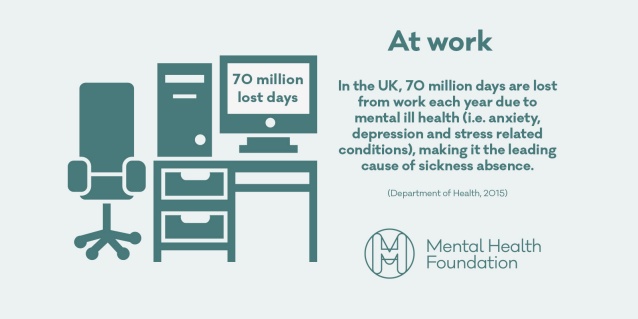
Read the full Fundamental Facts Document
I’ve written a post on #Dignity for @MH_Voices as well https://mentalhealthvoices.wordpress.com/. (I'll post the link when it's up.) In it I explored the perspective of mental health from a
professional employee’s point of view. I ended by stating what I believe we
should expect our employees to never take away our dignity and always treat us
with respect.

I like to think the best of all people – but I expect from
everyone respect in the workplace, no matter your skin colour, (hair colour in
my case!), religion, sexuality, disabilities or life circumstances. Dignity is
defined as “The state or quality of being worthy of honour or respect”. In
reference to our individual right to dignity, I like this example: To “stand on
one's dignity” meaning to Insist on being treated with due respect. (references
from OxfordDictionaries.com)

The
Mental Health Foundation writes of the theme of ‘Dignity’ for this year’s
World Mental Health Day (10th October 2015) “…An ill-informed and damaging
attitude among some people exists around mental health that can make it
difficult for some to seek help. It is estimated that only about a quarter of
people with a mental health problem in the UK receive ongoing treatment, leaving
the majority of people grappling with mental health issues on their own,
seeking help or information, and dependent on the informal support of family,
friends or colleagues.”

So, just in case anyone reading this would like to know what
I expect from others in relation to mental health, it’s this: At the end of the
day, as my colleague Greg is often reminding me when I'm resourcing our next
project, resources or employees are still, actually and most importantly,
people, and they deserve respect, support and never to feel undignified because
they share at work that they have an illness or life challenge. In fact they
should be applauded for their courage and given the support that they need.

1)
Ask people how they are, and actually mean it.
“How are things?” “How have things been with you?” And if it means taking three
‘how are you?’ cycles to get to the point where the person can actually answer
honestly, then three it is. Or four. Or five. And so on.
2)
When they tell you how they are, show them
respect and support (whatever they say – this isn’t just about mental health).
“I’m sorry to hear that.” “What can I do to help?” “I’m here for you.”
3)
If they don’t want to talk about their mental
health in detail – even at all - that is okay – it is up to everyone whether
they share personal information about themselves, but tell them, again, “I’m
here for you.” “Let me know at any time if I can do something.” “I’m not going
anywhere.” (It might be worth saying that – at work – you will get more support
officially and this may mean you can adjust your work situation to accommodate
your needs better when / if you’re well enough to be working.)
4)
If they talk to you about it, say thank you.
“Thank you so much for sharing that with me. I imagine it might have been
difficult for you, but I really appreciate you coming to me with this. I hope
that I/we can help you.”
5)
If you feel you can, and you have experience of
mental health – whether yourself or someone you know – share that. “You are not
alone in this.” “I actually have depression myself, so I hopefully can
understand something of what you’re going through.”
6)
Keep the conversation going. “How can we support
you?” “What can I do that will help with this?” You sincerity and the fact that
you are prepared to have a serious conversation about this will hopefully show
your colleague or employee that you are in their corner.

And then – if this is my experience - I expect to get
support as a follow up (occupational health referral, adjusted flexible
working, time off, or whatever I need within reason). I expect to be treated
with the same respect as everyone else in my company, whether I have a broken
back or a broken spirit. I expect people to respect me because I am a
professional, competent person and I am worthy of respect – whatever external
circumstances I’m also handling. I respect other people in the same way. I
expect openness and honesty rather than whispering about employees behind their
back which will make them feel like they should be ashamed of what they’re
going through.
And finally – and this will come, and only now from the most
exceptionally inclusive people – I expect praise for those people who have
taken a deep breath and spoken up about their illness. People should stand on
their dignity. Everyone matters. Everyone deserves respect and to dignity. So
let’s make sure that happens.


