Follow Jessica

Showing posts with label #support. Show all posts

Saturday, 19 December 2015

Community Spirits...Let's All Stand Together in Love, Support and Respect

Sitting and reflecting on the wonderful communities I belong to

Did you know that there was a time when communities didn't exist at all? I hadn't thought of it until I was in my third year at university learning about Ancient Greece and I started reading about the way city states (poleis or polis, singular) were created.


"Greek citizenship stemmed from the fusion of two distinct but related elements, (a) the notion of the individual state as a 'thing' with boundaries, an ongoing existence, and a power of decision, and (b) the notion of its inhabitants participating in its life as joint proprietors."

Of course, communities and the act of living together go back tens of thousands of years before this, but as any historian would say, that's "not my period"! (I think they were talking about dates, though one can never be too sure.) As early as the seventh century BC, people were identifying themselves as a group with the people who lived around them, making boundaries that defined where they were and then taking part in life as a group.

Totally Locally... Teddington

For me it's hard to believe that people didn't always have a joint identity at least where they lived. Now, of course, we have communities all around us, not only where we live, but where we work, where we exercise, where we go to school or university, and where we join groups with like-minded people for artistic, political, religious or any other type of shared interest.

We all stand together. Indeed. Love this.

Over the past year I've experienced some of the best community spirits I could possibly imagine.
My work colleagues in the KPMG Learning Academy are brilliant people who have supported me with reasonable adjustments for my health, real dedication and team spirit for every project we've worked on together. I've made friends at Bushy Park parkrun where we gather in rain or frost or (crosses fingers) sunshine at 9am on a Saturday to do a collectively mad thing and run around the park for a 5K run. I've been accepted by Mind as a volunteer and together we are working on addressing the stigma around mental health and trying to raise funds to get people the support they so deserve, and the respect that should be a given but is still something many are struggling to find. I've had my wonderful friends, who have sent me messages in tough times and shared their own troubles with me, and we've supported each other, which, as my therapist keeps telling me, is exactly how it should be.
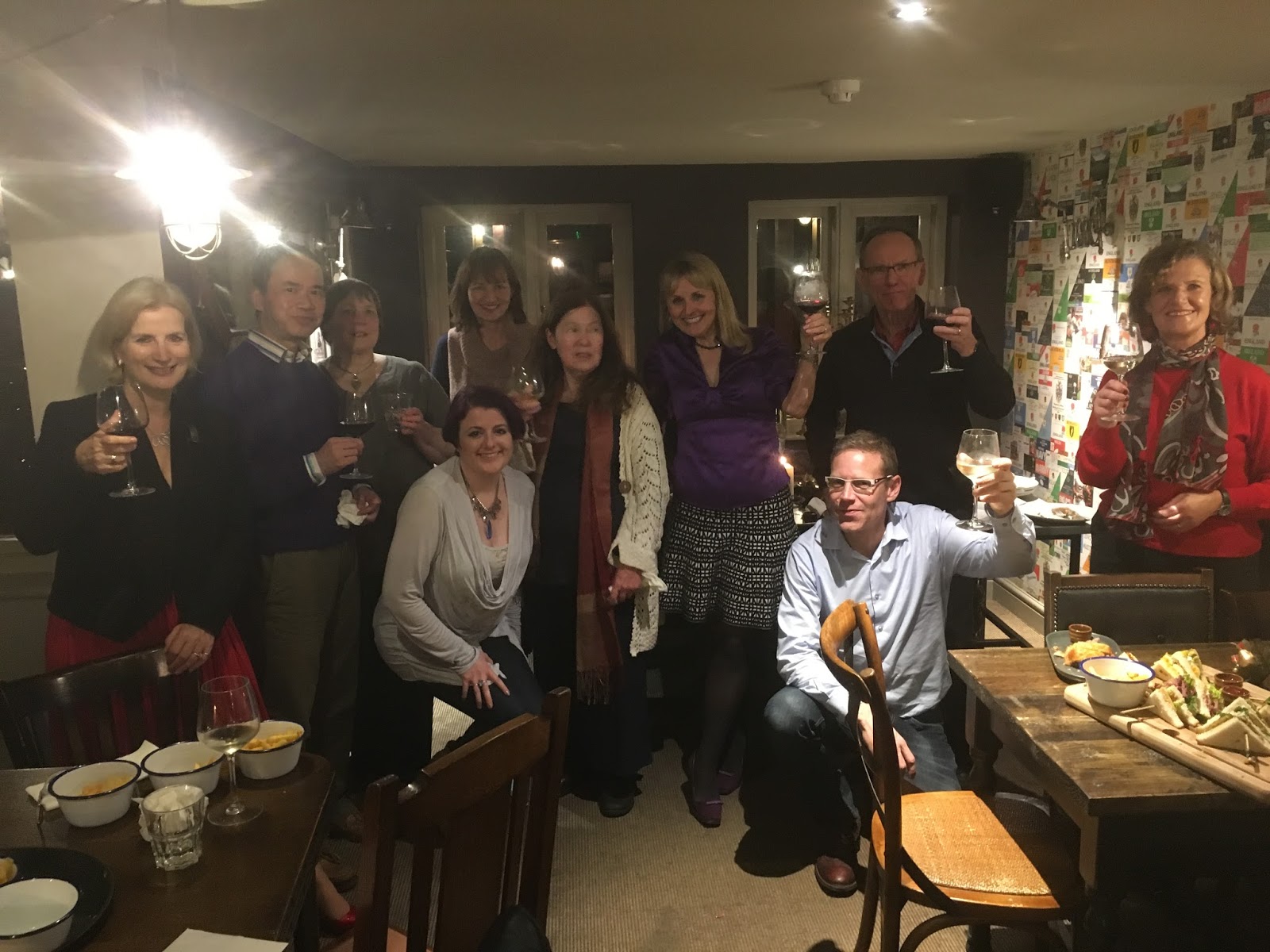
A new community of friends made through
Helen Astrid and her Singing Academy

The community I haven't mentioned about is the place where I live - Teddington. Having broken back my back late last year, and also trying to manage my depression through 'reasonable adjustments' like home working and not travelling, I've stayed at home to work for a lot of my working weeks. As I've said before, this is hugely helpful because I've been able to stave off loneliness which I experience when I'm isolated too much from others, It's a balance for me of wanting to get out into the world and see people and feeling that I'm not up to it on other days. Thankfully at the moment those days are much fewer, but I do pause to check in with my health regularly to see if I'm lower than usual and might need to do something extra to keep my health as good as I can.

London, Christmas Style

Teddington is a small town about 35 minutes from central London by train. Many families live here, many people (from my small network) seem to have grandparents or great aunts here. And there are also people like me, in their thirties (and twenties) who have a flat here because it's (just about) affordable based on quite a good salary and is not too far away from central London. It used to be colloquially and locally known as Deadington, lacking many shops, with a fairly unhealthy crime rate and not much going on.

Thanks Postman Pat for teaching me about communities from an early age.
Plus, you had a cat called Jess. I had to be on your team!

What a difference even in the five years since we've lived here. We have a huge range of unique shops selling everything you could want, and a particularly strong collection of independent shops, which I'm really proud of, especially given our current economic climate and how challenging it is to afford all things small-business.

Hands up!

Within those small businesses I've made friends with some very special people in the last year. I've been able to get out of the house and experience just a little bit of the outside world when I'm particularly unwell, or when better I've had wonderful conversations with these people and we've shared laughs and experiences in a way that has been hugely beneficial to my mental health. I am really touched by the kindness, support and love that I've received (and hopefully I've given some of this back!).

My mum... I'm so lucky to have a supportive family

Last night I launched my mental health campaign #RedefiningResilience at 1of1 Designs, a beautiful treasure trove of a shop where you can find many, many treats for yourself or your home, run with love by Kate and her husband Charlie, who also generously donated 10% of takings to Mind last night. Other special local businesses (and a few chains too) were kind enough to donate raffle prizes for the night, which raised money for Mind. A local couple who run a wine company - Doran Vineyards - provided wine for the event, my friend Hannah (whom I had not seen for 15+ years since we left school!) went above and beyond the bounds of friendship and made 50 cupcakes with cherry blossom decoration to match the brand.

AND they tasted SO GOOD

On top of all of the above, the friends who either came along or sent messages of good luck from wherever they were, truly touched me. I think it's probably quite hard to be friends with me because although I manage to work full time and hardly ever take a day off, there have to be trade-offs for this, and they come in the form of my being not always that social. That being said, I love my friends, I love seeing them and that we support each other, and last night very special messages came my way, and some people discovered that the journey from Highgate to Teddington really does take about an hour and a half, even on good public transport! Eek!
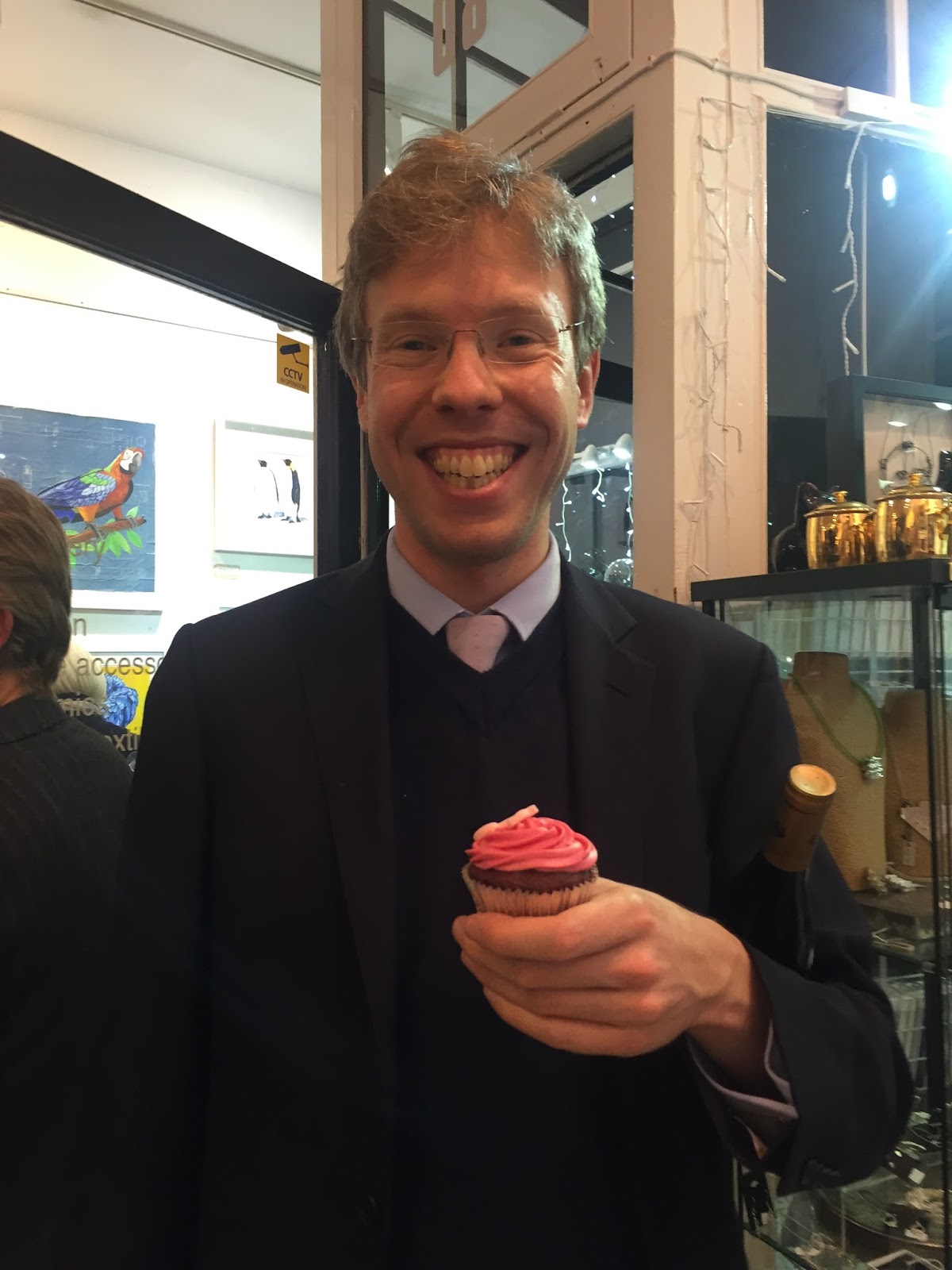
My friend George...A super friend.

I am a part of a community of individuals challenging stigma around mental health, but in all of the above I find myself in communities. At work, in Teddington, in my interests in books and films and food, and in much more. Within our communities we can make positive changes - whether that's at work or elsewhere. Working together, supporting one another, we can grow. As a change management specialist, who tries to shape change within organisations through learning, communicating and bringing people together, I see everyday why it is important that we have our communities (or our networks if that sounds more work-appropriate).

Speaking at the Redefining Resilience Launch in Teddington
at 1of1Designs Teddington, who generously hosted the event

The communities that I have chosen form my identity, as a friend, wife, colleague, campaigner, patient and more. Without this support, I don't think I could be here today, so thank you to all of you.
I have included some pictures and videos of the communities in my video diary series #12DaysOfXmasMH. This short Christmas campaign describes my experiences of what resilience and what mental health is like for me, and a big part of that is finding support from others that enables me to keep going.


More posts to come, but for now, thank you, readers, because you are a part of this community reading the blog and interacting with mental health and life and all its winding pathways. Take care of yourselves and I send you much love for the weekend. x
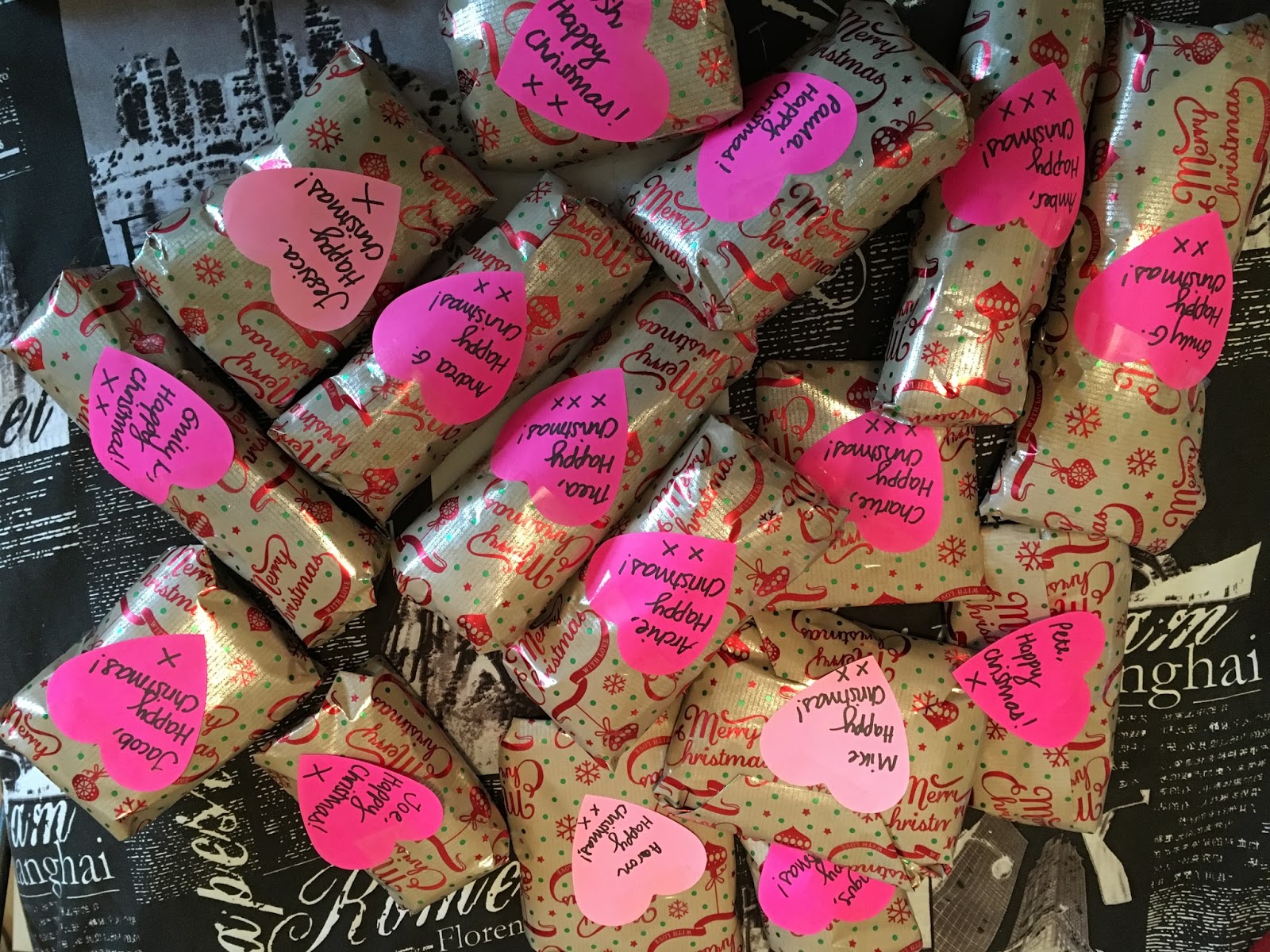
Can't wait to give these gifts to my family tomorrow!


Monday, 26 October 2015

Managing Mental Illness: The Business Case for Supportive Line Management


I'm pretty exhausted this week, honestly, because I did a number of evening engagements either related to work and mental health or work and the digital learning and change role that I have as my 'day job'. By Wednesday I had worked about 30 hours, travelled to multiple locations and talked a lot about mental health. And if you read my post last week on burnout, you'll probably be aware that too much of that busy-ness is not good for me (or any of us actually) in any respect - mental health, physical health, whatever.

Nike Self-tying laces (in honour of Back to the Future, of course!)
If Nike could also produce self-showering, self-dressing,
self-makeup, etc. I think they'd really be onto something...

If I am going to continue to be okay, then I have to recognise that whether I feel tired or not on weeks like that, to avoid a mega crash into depression or a buzzing anxiety that I can't shake.

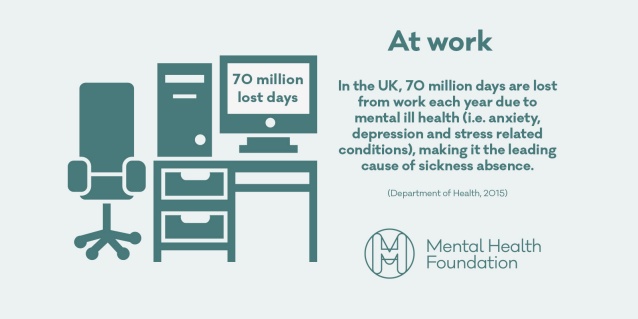
And in case you've forgotten or didn't know, here are the stats:
I and everyone need to take care of our health, and
we need respect and support, not inequality and discrimination

So this is going to be (read: is intended to be, and then laugh at me 1000 words later) a short post, and I'm grateful to Isabella Goldie whom I heard present at DIDLAW's Mental Health Disabilities and Stress At Work conference on Wednesday, for providing me with all the fire for my #redefiningresilience engine. I came away from that conference buzzing in every particle by the inspiring people standing up and saying "we need to do more" to support colleagues, managers, peers, team members to live in a mentally healthy work environment and be able to seek help


without feeling ashamed or repulsed by themselves, or feeling shamed or unsupported by their employer for doing so.

When I was sick last year I had several experiences with line managers - some very, very good, and some not so good at all. At a critical point with my mental health where I absolutely knew that I could not carry on living with such symptoms of depression pervading my existence, I am fortunate enough to have had the following resources to help me reach for help rather than (perhaps fatal) harm. But without supportive line managers I might not be here writing this.

The key message of this post is: we need line managers (US readers, line manager = supervisor, i.e. the person directly in charge of you and what you do at work)  to make it their business to educate themselves about mental health; and if they are approached by someone to talk about mental health, then they don't need to demonstrate a working knowledge of Jeffrey Young's 'schemas' or practise CBT, but they do need to be empathetic, provide safe boundaries for people to share their mental health experiences and then continue to be treated with the same respect as before, while incorporating appropriate reasonable adjustments to continue with work.

I am a line manager with several team members working with me or for me, depending on how you look at it, on lots of different projects. I recognise that I am a small fish in a very big corporate pond. I've been managing teams or individuals for over five years now, and I admit I was highly ineffective in certain respects during my early experiences, and hope that I have now made sufficient improvements that can be seen by the people whom I manage as supporting, respecting and empowering them to succeed in whatever they are doing.

You and I and everyone we know has a responsibility to

 create supportive 'moments' which make our lives easier, healthier and allow us to thrive.

With a view to keeping this post short (for my health) here are some things that I've found helpful as an employee, and following that a few things I think are needed from line managers.

If line managers aren't supportive, I know from personal experience, employees like me don't recover well, may not recover, may leave the organisation, and may even consider / attempt suicide out of desperation. Please remember that - this is about life or death in some cases. You as a line manager have a chance to make the biggest difference of all to someone's working life.

Here are some anonymous real quotations from people about the negative impact of unsupportive or unhelpful behaviour from line managers at work:


Something similar to this happened to me. It made me feel:
  • that the stress was all my fault and was 
  • a point of performance feedback (even when I knew it shouldn't be)
  • ashamed of having failed at work
  • disgusted with myself
  • a complete waste of time
  • ready to die


I would find it hard to stay in a job where I wasn't supported to be me, depression and all, but many people do that and keep pushing even though they are feeling horrific. Which makes them more ill. It saddens me and angers me that people are not listened to and supported when a few small things could make a huge difference - and is both the right thing to do and the right "business" decision: the average cost of losing an employee through attrition (related to anything) is £38K. If we can stop people feeling unsupported and make people healthier and happier, everybody wins.


One of the commonest things I hear from people sharing their stories with me is the constant contact from work asking when they are coming back. Of course this question needs to be asked and contact - supportive, not harassing contact - is helpful. But does that question need to be asked that day/ every day? More tips on what to do below, but really, just consider how you'd feel if the day after breaking your leg, your line manager called you to see when you could come back to work (and you work in an active job, let's say). Appropriate? Absolutely not. Did you know that you can identify a family member to be your point of contact while you're out and recovering? You can, and totally stepping away from work when you're really ill might be the best medicine you can take.


There are many resources available to help you as a line manager to feel more comfortable that you understand the issues of mental illness to some extent, and that you also understand the role that you have to play as a line manager in engaging with mental health at work (either on an individual basis or in general) in such a way that you make it easier to talk about, reduce health problems associated with the strain of hiding such a condition or "presenteeism" and support those with more serious conditions with respect. By according them with dignity and helping them work as much as they can, they can feel safe in the knowledge that you are on their side just as much as on the side of the organisation you both work for.


1. Remember that 'employees' are people above all else. Listen to them. Respect them.

We are all going to have events in our lives that make work tough. I'm not just talking about mental health, I'm talking about life events such as having a baby, meeting a new partner, breaking up with a partner, losing someone, being ill physically, and so on... When you show that you are listening, rather than judging, or behaving as if having a conversation with your team is not valuable to you, you will build trust with your employees and in every way (including health, of course) you will make for a more flourishing team, who trusts you and feels so much more comfortable belonging at work.


2. Show and tell: make sure your employees know - from you - that you value them


Working long hours, with tight deadlines can cause us all to feel the pressure and at times we might not have a great day (or a great week etc.) because of this. Showing empathy to your employees and highlighting again and again that you value them and continue to value them provides a hugely supportive working environment. When I was teaching 11-16 year-olds, I was a strict disciplinarian, but having established those rules in my classroom my students felt 'safe' because they absolutely knew the status quo. From that structure of safe and firm boundaries they were able to be creative, try new things, be rowdy (sometimes, yes, I can still hear the ringing in my ears) and be their 'whole selves' in a way that helped them to learn and grow at school. We can do this as employers / line managers / colleagues and show people we are glad they're there, and we want them to stay.


3. Take some responsibility for your employees' wellbeing.

This might sound like a no-brainer, but the word 'resilience' which I'm campaigning to redefine is so, so often used as a term that it is expected that employees will demonstrate, relieving organisations of all responsibility. This is not acceptable. Every employee is responsible for taking care of him / herself. But every organisation is also responsible for providing support. Line managers are (literally) at the front of the line in terms of managerial hierarchies, and so must, must commit to providing a supportive work environment. As I said above, line managers don't need to be experts in mental health, but do, for example, have a responsibility to understand the organisation's sickness and absence policy, return to work policy and have some idea of the key contacts (like HR) who can sign off on supportive reasonable adjustments to make an employee's working life so much better whether they're in work, returning to work, or off sick. 

Also, manage your projects or your team's time effectively: in my opinion there's no excuse for poor project planning which mismanages everyone's expectations and can make people very sick. It also sets very poor expectations for clients- they think they can get x done for y price, but actually if they paid for all the hours really worked it might be double that... And so next time, trying to have a properly planned project, if you tell them the real cost, they won't want to pay. And as for your employees: if they're anything like me, (or how I used to be)  they'll work all hours to get it done for you at the expense of their life and their health. 

Returning to Work


4. Be Flexible and Make Reasonable Adjustments

I think this slide speaks for itself:


5. Ask for help - because you also deserve support!

No one expects you as a line manager to be able to do this all yourself either. Like I said above, this isn't about making the employee 100% responsible for his or her work life, but it isn't all your responsibility either, and you need to make sure you're okay too, as a line manager, as an employee. As a person.
There are many resources out there to help you which DIDLAW Education can help you to find, and the Mental Health Foundation, where I got these slides from, and from Mind, Mausdley Learning, Connecting with People, and so on. Your employer should also have some training available, or support you to attend training to learn more about this. You are not alone in this, and you can make a massive difference.

So as you go into Monday, please bear in mind the above, and remember that you and everyone matters - so please be kind, and be kind to yourself too, as always.

x


Friday, 9 October 2015

Everyone Matters and Deserves Dignity: Inclusion Week and World Mental Health Day 2015


I have just finished (as of four minutes ago as I’m typing this at 17:34 on Friday) InclusionWeek in the UK for @KPMGUK. I have to say I am rather shattered. But also absolutely elated. And tomorrow is World Mental Health Day 2015, with this year’s focus on #Dignity. I will be running the ParkRun (@BushyParkRun) and writing the run report with a focus on the stories of people who run either for their mental health or for other causes. I’ll repost it here when I finish it.


So, to reflect on the week, what a week it has been. On Monday I launched my campaign #RedefiningResilience: https://www.facebook.com/RedefiningResilience to share my story with the groups of people I know may be able to identify with what I’ve experienced. I want to help people to realise that if they are still going then they are resilient. You can read more about this on my page and in this post.


I also participated in three of the many events I’m proud to say that the fabulous Diversity and Inclusion team at KPMG organised with support from all of our networks.

I spoke on a panel on Monday evening for #LeanInCircles, answering the question, “What would you do if you weren’t afraid?” with my experience of deciding to take the step (or leap) to be completely open and honest about my mental health at work. I was really proud to see how many colleagues then shared some of their own experiences with mental health within their groups – as I said at the time, the more that we talk about this, the more that we keep the conversation going, the more we will enable our colleagues to be better through that comfort to be honest, and feel supported and comfortable to get help if they want / need it.


On Tuesday morning I was back in at 8am on another panel for our Mental Health 101 panel discussion, where 160 colleagues attended to hear about “Everything you wanted to know about mental health but were afraid to ask”. The turnout was amazing and the questions and engagement from the audience was inspiring to me. I was joined on the panel by partners with lived experience of mental illness, our occupational health chief medical officer and the head of employee wellbeing. I tried to speak honestly about my experiences, highlighting that everyone deserves respect and support, that everyone should be supported if they choose to share, and that everyone has mental health and we all need to take care of ourselves.


I finished my contribution (in person) by sharing a stand with many other colleagues from our work’s network to talk about our internal #BeMindful network and the support that KPMG offers and advice on how to look after yourself mentally at work. All in all, a tremendously enriching and inspiring experience for me – to see my colleagues talking about mental health, many for the first time – and finding common ground where before they might have anticipated isolation and stigma.


As I said in my Monday post about #redefiningresilience, living and surviving with a mental illness does not always mean that you get better and ‘bounce back’. “I do not bounce,” I told Tuesday’s audience. “But I come back.” Slowly. So slowly, and it may take time, setbacks, tears, frustration, cake, pills and more. But I come back.


This week has also been a week of celebration. I met fellow shortlisted candidate @Jackie8 (Jackie Scully) for an inspiring chat on Tuesday night where we shared our various experiences of resilience. I am hoping Jackie will share her story of resilience (facing massively intrusive hip surgery, then breast cancer while being creative director of Think) soon on my #RedefiningResilience page.


On Wednesday night I attended the #Brummell30 @BrummellMag reception for those women who - like me - have been listed on their list of 30 most inspirational women in the city championing diversity. I was honoured to be in the company of such amazing women. 


I’ve written a post on #Dignity for @MH_Voices as well https://mentalhealthvoices.wordpress.com/. (I'll post the link when it's up.) In it I explored the perspective of mental health from a professional employee’s point of view. I ended by stating what I believe we should expect our employees to never take away our dignity and always treat us with respect.


I like to think the best of all people – but I expect from everyone respect in the workplace, no matter your skin colour, (hair colour in my case!), religion, sexuality, disabilities or life circumstances. Dignity is defined as “The state or quality of being worthy of honour or respect”. In reference to our individual right to dignity, I like this example: To “stand on one's dignity” meaning to Insist on being treated with due respect. (references from OxfordDictionaries.com)


The Mental Health Foundation writes of the theme of ‘Dignity’ for this year’s World Mental Health Day (10th October 2015) “…An ill-informed and damaging attitude among some people exists around mental health that can make it difficult for some to seek help. It is estimated that only about a quarter of people with a mental health problem in the UK receive ongoing treatment, leaving the majority of people grappling with mental health issues on their own, seeking help or information, and dependent on the informal support of family, friends or colleagues.”


So, just in case anyone reading this would like to know what I expect from others in relation to mental health, it’s this: At the end of the day, as my colleague Greg is often reminding me when I'm resourcing our next project, resources or employees are still, actually and most importantly, people, and they deserve respect, support and never to feel undignified because they share at work that they have an illness or life challenge. In fact they should be applauded for their courage and given the support that they need.


1)      Ask people how they are, and actually mean it. “How are things?” “How have things been with you?” And if it means taking three ‘how are you?’ cycles to get to the point where the person can actually answer honestly, then three it is. Or four. Or five. And so on.
2)      When they tell you how they are, show them respect and support (whatever they say – this isn’t just about mental health). “I’m sorry to hear that.” “What can I do to help?” “I’m here for you.”
3)      If they don’t want to talk about their mental health in detail – even at all - that is okay – it is up to everyone whether they share personal information about themselves, but tell them, again, “I’m here for you.” “Let me know at any time if I can do something.” “I’m not going anywhere.” (It might be worth saying that – at work – you will get more support officially and this may mean you can adjust your work situation to accommodate your needs better when / if you’re well enough to be working.)
4)      If they talk to you about it, say thank you. “Thank you so much for sharing that with me. I imagine it might have been difficult for you, but I really appreciate you coming to me with this. I hope that I/we can help you.”
5)      If you feel you can, and you have experience of mental health – whether yourself or someone you know – share that. “You are not alone in this.” “I actually have depression myself, so I hopefully can understand something of what you’re going through.”
6)      Keep the conversation going. “How can we support you?” “What can I do that will help with this?” You sincerity and the fact that you are prepared to have a serious conversation about this will hopefully show your colleague or employee that you are in their corner.


And then – if this is my experience - I expect to get support as a follow up (occupational health referral, adjusted flexible working, time off, or whatever I need within reason). I expect to be treated with the same respect as everyone else in my company, whether I have a broken back or a broken spirit. I expect people to respect me because I am a professional, competent person and I am worthy of respect – whatever external circumstances I’m also handling. I respect other people in the same way. I expect openness and honesty rather than whispering about employees behind their back which will make them feel like they should be ashamed of what they’re going through. 


And finally – and this will come, and only now from the most exceptionally inclusive people – I expect praise for those people who have taken a deep breath and spoken up about their illness. People should stand on their dignity. Everyone matters. Everyone deserves respect and to dignity. So let’s make sure that happens.


Monday, 21 September 2015

Short Post - Shortlisted for Women of the Future Award 2015

It is such an honour to be shortlisted for a Women of the Future award - thank you

I'm surprised, delighted and somewhat speechless and overwhelmed to announce that I've been shortlisted for a Women of the Future award in the category for Community Spirits. Congratulations to all the other women who are shortlisted with me and for the amazing work that they do.


This comes a few days after it was announced that I am also now named as 1/30 Inspirational City Women Champions of Diversity by Brummell magazine.


Being recognised by both of these organisations / publications is a tremendous honour. A year ago I still wasn't being fully open about my mental health because I was terribly afraid of the stigma I might receive from others, as I had experienced in the past. I still see that stigma and experience it both personally and through the accounts others share with me. But now I talk about it. I won't accept it. I speak out and up and will keep speaking until this stops.

I support @mindcharity and @timetochange 
as a media volunteer, a campaigner, a runner and more.
Please read more about the work of these two amazing charities here: 

This stigma has to end. Mental illness is a killer and not being able to talk about it makes it worse. If you can start a conversation in your work place, your family, with your friends or with someone on the bus where we talk about being more accepting, understanding and kind to each other, whatever our differences are, whatever illness or disability we may have, we can make this conversation part of a bigger national and international discussion where we can highlight the dreadful stigma around mental illness and  - together - end it once and for all. I represent a person who is living with a mental illness but I am living with it. I am not a psycho, a nutter, a mental case, a head case. I am not a #headclutcher. I have an illness and I need respect for that. And then I need respect to get on with my life as I choose to. And one of the things I choose is to speak up for others suffering with mental illness (and stigma) who do not feel they want to or are able to speak for themselves.

Read more here about @Rethink_ and this statistic

I hope you will join me and have a conversation about this today, tomorrow, or someday soon. #MentalHealthMatters. We all have it, and we need to look after it. Our own and others'.


Thank you for supporting my blog where I will continue to share my story and perspectives on what mental illness is really like. And thank you to @womenoffuture and @BrummellMag for recognising me. I am overwhelmed, delighted and inspired. I hope it will help to bring more people into the conversations we need to have about #MentalIllness and the actions we need to take to change how we care for mentally ill people - the millions within our country struggling and surviving (or not surviving) - better.


Thank you.