Follow Jessica

Showing posts with label Time to Change. Show all posts

Friday, 7 August 2015

We Can Work It Out...Or can we? Talking About my Mental Health at Work

Stephen Fry, Patron of Time to Change and mental health advocate

In June, when Stephen Fry appeared on Desert Island discs (which, if you haven’t heard of it, is a fantastic way to glimpse the biographies of the world’s good and great through their reflections on life and 8 discs they would choose to accompany them if they happened to be cast away on a desert island). He talked about the impact of his mental health on his life. He also talked about his decision to be open about his condition, recognising (to paraphrase) that he is never free of thinking of his mental health or others’ through his decision to be open about it. 


I sympathise with this perspective, because I would very much like to be free of my own mental illness and to go through life with a normal amount of woe, (whatever a normal amount is) balanced against a reasonable ability to cope with whatever life may drag, toss, push, cajole or offer into my path.
This is the kind of conversation I can so easily have with myself, again and again.

At the moment, however, I am still handling poor mental health every day, and I am more than happy to speak about it in the hope that it will help me to accept myself as I am, rather than embracing all the defective qualities I find it so easy to discover in myself. More than this, I hope that my decision to be open will help other people at work be more open about their illnesses, and I especially hope that it will help managers, leaders and HR professionals (the people whose job it is to support us at work) to see that depression and anxiety do not exclude a person from being able to make a valuable contribution to the working world.


I “came out” at work last year after realising that to go on hiding a condition that left me at times debilitated and unable to get out of bed from my employers only fostered my own strong sense that I was actually a failure, hopeless, useless and no good for anything or anyone. I set myself extremely high standards, nurtured since my earliest memories, for everything that I do, and when I considered the risk that, in coming out with my depression, I might find visible proof that others saw me as “less than”, “weak”, “to be avoided”, I only wanted to crawl further beneath the duvet, to barricade the windows with blackout blinds seven fold and never to come out again, rather than to take that risk.

It's not actually wallowing. It's drowning.

I had had bad experiences at work previously when struggling with my depression, which you can read about earlier in my blog and also in the piece I contributed to Buzzfeed this week about my precarious route along the tangled wiry cables of a life spiked with barbs of depression towards being honest about it to myself and others. It was when I experienced bullying from people outside of my company which left me so destroyed that I did not want to live, that I finally got help in hospital. And it was during recovery and return to work that I realised that I would only protect those bullies and harm myself if I didn’t try to put across my point of view, and show that I was still Jessica, depression, anxiety, and all.

Sometimes I feel this way; mostly I have to work not to hide it, 
as well as deciding whether I have the energy to smile

I have heard many negative stories from people who have been terribly treated by someone from their employer when they have tried to express their needs for support because of their mental illness. It enrages me when I imagine the huge step a person has to take to ask for help because of a (still very much stigmatised) mental illness. I am ashamed for the human race that people wilfully (at times) harm people with mental illness when they refuse support or (at best) to ignore requests for help. 

Despite the funny message intended, being a boss 
who doesn't support colleagues and staff's health needs  is not acceptable.
An atmosphere at work where there is too little support is toxic and unproductive

What makes it worse is that when I am struggling with depression the last thing I want to do, instinctively, is to draw attention to it publicly, because my self-loathing and acute awareness of everything weak and bad in myself is so heightened that I am seething with the physical sensations that this brings, and feel sure that others must be able to see that I am totally worthless. To be refused support only perpetuates this notion. To be told to “pull yourself together” makes me fall farther apart.
It's easy to believe this when you are struggling with depression.
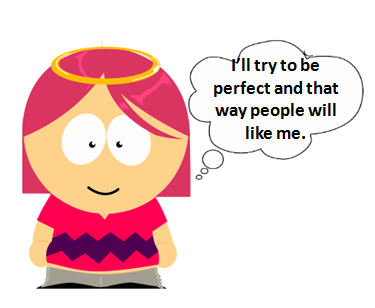
It's so easy that I can believe everyone else will have the same low opinion of me
that I can have of myself

So what would I suggest to those people? Not everyone will have a positive experience when speaking about their mental health at work…but if you are ill you need to take whatever steps are needed to try to get well, whether that is medication, therapy, time off work, adjusted working hours, adjustments to the way that you work. You should be able to get these. 
I believe that everyone has the right to support at work, with illness
and that everyone has the right to work without fear of discrimination

I understand that you might not want to speak up or ask for help, naming your need as a mental illness, because you feel the weight of your own self-hatred holding you back, and you are afraid that you’ll be met with stigma, be shamed, be devalued, perhaps even lose your job.

I can only say, you are not wrong to ask for help. You deserve help. You are worth it, even if you have never felt more worthless. You can seek help from Remploy (in the UK) and other mental health work information sites which provide information for you on your rights and give helpful advice on how to speak to your employers about your needs. (And, on the Remploy site, there is also a downloadable advice leaflet for employers, so if you’re reading this and wondering how better to support your staff, please take a look at this, and use the Mind website and helpline for further information.)

Remploy and other sites can help to reassure us that we do have rights,
and can (and should) expect support for our needs
(Mind's legal line can also advise on what to do, you can reach them on 0300 466 6463) 

In my experience, I continue to have to “come out” throughout my working life, because my job means that I’m frequently working with different teams of people who don’t know me or the fact that I have health reasons for needing adjustments to the way that I work. I try to do this in a fairly ‘light’ way, because I have work to do, firstly, and if we have a thirty minute conversation about my depression and medication, that’s not something I’m going to be able to put on my status update to my manager as a positive outcome. (Although, I can put it in this blog and feel a little bit glad that I continued to be honest when it was hard!) I want to be seen as the sum of my parts, and depression is still just one part of who I am, the pink and purple hair-streaked business woman who likes to write, sing, paint, eat good food and drink good wine, buy far too many pairs of shoes, run in the park and watch endless films and TV shows on Netflix, and read good literature and totally crap novels.

The crucial point: I am not denying that my mental illness is part of who I am.

I am who I am...depression, pink hair and all

Towards the end of that episode of Desert Island Discs, presenter Kirsty Young asked Stephen Fry, “You’ve more than hinted earlier that much of the torment you’ve gone through is why you are the person you are. If you had the choice to live without your bipolar condition, what choice would you make?”
“Interesting" he answered. "I wouldn’t want anyone to underestimate the seriousness of a condition like that it can shorten lives, sometimes traumatically and terribly. It can have a terrible effect on families and people around you, but it’s so hard to separate it from oneself. W. H. Auden perhaps put it best. He said, “Don’t get rid of my devils because my angels will go too.””


I am still trying to be well, and on and on it goes. Tomorrow and tomorrow and tomorrow perhaps my depression will go. I am so lucky that I have had the chance to learn that, whatever I may think of myself in my darkest times, my illness is real and worthy of treatment, care and respect. And because not everyone has that experience (not even me, all the time, from everyone) I am going to carry on talking about it. Here, and on Twitter @volette and on Facebook, and face to face. I hope you might be able to join me one day.


Tuesday, 5 May 2015

Help, I Need Somebody, Help, Not Just Anybody...Or Any Drug...I Just Need Help...

I've said it before and I am sure I’ll say it again, after I say it here: recognising that you need help when you have depression, and trying to understand to what extent you need help, is incredibly hard.
I wake up most days and sort of mentally poke at myself: “How do you feel today?” “What’s you mood?” “Do you feel depressed?” “Do you feel okay?” “How do you feel about the day ahead?” “What’s your anxiety level?” As I lie there for those first couple of minutes after waking there are usually two different general responses to this: either I feel totally anxious and un-rested after (another) eight hours or more of nightmares, usually connected to the traumas I've recently experienced, or experienced in the past, or I feel okay. 


For two minutes. And then after those two minutes are up, I get to know exactly how I feel, really. My heart can start to sink; my stomach can curdle and recoil inside me with fear or unrest; my head can feel empty or too full, or both. My limbs feel sluggish and exhausted. My heart might start to race and I might start to feel sick at the thought of the day ahead, even if it’s just thinking about having a shower or eating breakfast.

If only it were that simple!

Mondays are the hardest because there are five whole days to get through before the weekend. And it’s not even as if I like the weekend, or find it easier to cope with. Sometimes the thought of seeing friends and putting on makeup and a happy (or vaguely happy) (or just not crying my eyes out and scaring everyone!) is too much to take, and the anxiety that I experience at the thought of this is almost enough for me not to go.

But as always, with all of the above, in 99% of cases I make myself go through with it. I know that I’m supposed to be brave and I’m supposed to get on with things, using all of the cognitive behavioural strategies that I've learned to support myself with. And I have my medication too (even though the anti depressants make my legs shake so badly that even with a sedative I can find it hard to sleep because they won’t stop moving).


Today I’m at hospital about to get help because I realised a couple of weeks ago that I was struggling again and that issues I was facing were escalating and bringing out the worst (or the best, if I look at this from the perspective of my fabulous type A personality) in me. I am going to go to groups that will help me look at my anxiety and depression and try to reinforce all those practical strategies I know I can apply when times are tough.


The day begins with group support, where we all have to name the emotions that we are feeling. Today I feel sad, angry – both at being here and needing to be here - and at the external issues that have helped bring me here again. We all speak our feelings. Usually it’s hard for some people because depression can leave you totally numb, so that the ability to experience any feeling seems untouchable, and incomprehensible. To be able to feel – it’s some cloudy far away concept – it doesn't mean anything.

Sometimes hope feels just like 'tomorrow'...something that never comes.

The best thing about support group is that it’s a free flowing conversation about our struggles, rather than a strategic almost-lecture on how to make ourselves or keep ourselves well. The rest of the day is much more tiring because of the things we need to learn – ways to control our anger, anxieties, how to adopt healthier coping strategies, how to use drama or music to articulate our difficulties.
I don’t know how I’ll feel at the end of the day, but I suspect I’ll feel very, very tired. Being ill is hard; getting the treatment is draining, and instead of the beautiful picture or essay or solved maths puzzle one might take home after a hard day’s work at school, I go home with the raw feelings unearthed by a day of delving into my past difficulties and disappointments, my demons and tormentors alive and well and brought into my consciousness from which ever compartment in my brain’s filing system I had buried them away.


But I have to go to hospital. I have to get help. The alternative is to stop living at all, or to continue with all the terrible symptoms of depression that make me want to stop living. So I go. I’m lucky to have the treatment and support. And I've recognised that I need help. So here I am. I'm getting help. It's another first step.


Friday, 1 May 2015

M'aidez on May Day - Getting Help

I've been meaning to write about the rest of my Japanese adventures, and they will come. This week has been interesting, though, for a number of other reasons, as I've returned to a semblance of normality with the working week, weekend and so on. And with those normalities come some of the 'normal' feelings of depression and anxiety that at times I feel that I want to run away from and at times just bury myself in the sand (i.e. the duvets) and hide from the world.

Saying this out loud has taken me a long time. But I've got there.

I may have mentioned this before, but a lot of people who have not previously been diagnosed with depression don't recognise the symptoms, in their infancy, for what they are. A change in appetite, a few bad nights' sleep and a lack of interest in doing things might slip by unnoticed for a while. Added to this the fact that many people who suffer from depression (and I would include myself in this 'many') are people who push themselves fairly far towards (and sometimes past) their own limits to 'succeed' in whatever way they can, whether it's at work, with a partner or in social situations.

Being superwoman isn't possible, and the kryptonite that gets me every time is depression coming back to remind me that I need to balance what I can do with what's realistic for my health.

There have been many posts and articles this week elsewhere which have sparked my interest in writing about my own situation again. This week is a pinnacle in my long road of depressive episodes as I can feel myself getting worse and worse towards next week when I have a planned hospital recovery period in the calendar for the whole of next week, and know that I will benefit hugely from some rest, some structured help, and just by being around other people who are freely talking about their struggles in a safe environment where there is no potential for shame, stigma, or having to pretend to be something that one is not.


I've now stopped pretending, but I still expect people to dislike me a lot of the time,
 and am a work in progress towards accepting myself

The fact is that when we can recognise the symptoms sooner we can stop the depression getting so terrible that we need to take many weeks off and have years of recovery ahead. It's hard to spot the signs and do something about them when you're feeling absolutely dreadful, but if you can do anything towards this it's a real bonus.

I've stopped pretending now - to a large extent: as difficult as I find it to accept myself to be myself, the real myself and not the garrulous 'great pretender' for whom everything is joyous, funny and to be made into a grand joke,, but I am trying to be just me whether it's me not having a great day or something else.


Sometimes plugging in or distracting is the safest way to get through to tomorrow

Here's a comment I wrote just now for a piece published recently in the Guardian:

Quoted from article: "People suffering from long-term conditions, such as mental health problems, will spend most of their time outside of NHS and social care settings."
[My comment]: I first realised I was depressed aged 20 when I sat in my university room, crying and crying but pushing my fist into my mouth or my head into the pillow, hoping my roommate couldn't hear and hoping that she could.

Fifteen years later I understand I was depressed and anxious as a young child, with the dreadful dread in my stomach, aged three or four.
My help has rarely come from the NHS; I'm not 'bad enough' or 'Ill enough' to qualify for anything more than a gp appointment. So I saw a (private) Ed Psych when I couldn't go to school anymore; I saw a wonderful (private) counsellor who helped me get back to university and complete my degree; I took pills from the NHS when I couldn't get (afford) help elsewhere. I had therapy again (privately) which was terrible and didn't help. And last year I was in hospital (privately) because I didn't want to live but - again - I wasn't ill enough for NHS help of the kind I needed. And now my GP remains supportive but my major support comes from (private) medical care. This weekend and next week I'll get some more of this kind of help to keep me going, to not take the worst step. Thank you to my brain for just about enabling me to study, work and pay for my life in private mental health care.
Thank you to all of those charities mentioned above. Although I have not benefited from you directly my knowledge of others who can't afford care privately need you now more than ever. You are amazing and I pledge to continue to support Mind and Time to Change and others as much as I can. Because not everyone is as lucky as me and can afford this care or have it covered by private medical care. And for goodness sake, we're still working hard to get it recognised as with equal rights to those with non-mental health conditions. It's already so hard. Let's help each other. And by the way, #GE2015 candidates, I'd gladly pay extra tax to support the NHS to be able to survive and serve us all - mental health and other patients - better. Just give me a call. @volette or via my blog Laptop on Tour.
Thank you Guardian for publishing this piece. I believe the third sector is critical for helping those in need struggling with all the debilitating effects of many mental illnesses. Thank you.

There's a third element that supports recovery that is not mentioned here, and I think is truly, critically important, and that is the support that comes from one's friends and family. I owe a huge debt of gratitude to my friends and family for their unswerving support for me through all the difficult times that I've experienced. I continue to need them (and this is challenging, as I ask myself, "When (soon surely) will people become sick of my sickness and my need for support?" I don't know the answer but I hope it lasts a bit longer than my illness does...and in return I hope that I try to be a good friend when I can, and answer texts or send them, make phone calls or meet up when I'm well enough, and when not that I'm accepted to do that. I hope so. 


I find these positive statements hard to hear, but I'm glad some one is saying them.

I don't think it matters whether it's a friend or a family member (or indeed a partner) who is your go-to person when struggling. I hope that everyone can have someone, and if not someone in their personal or professional lives, then I find all the more reason to support the vital charities mentioned in the Guardian piece and many more who do so much. I am an advocate for supporting one another, and for feeling free and able to go in search of that support without fear of judgment or censure. With that said, I wish you all a healthy weekend ahead, and hope that if you need help you can find it from your friends, your support networks, third sector organisations or medical professionals. After all, we all need a little help sometimes, and we can share in the mutual support of others and ourselves by working together. Take care. x
With a little help..this can be true.

Sunday, 5 April 2015

Laptop On Tour Once More! Part One: Ceci, c'est un blog, pas une blague

Alors, mes amis, je suis arrivé à Paris! Yes, today I have finally left Teddington and am on my way to my first holiday in eight months, and since having my terrible physical accident! It's exciting but a little bit scary.

Paris and Le Tour Eiffel (just seen), from the air


Some things remain normal of course, one of them my best and beloved terminal (terminal) 4 at Heathrow airport, where to stand a chance of making your flight on time it is best to arrive seven hours before your flight is scheduled to take off (i.e. delayed, cancelled, moved to another day, be grounded by rain...), to travel business or blag your way into the fast track queue to escape the endless tedium of explaining to an official who has no interest in working whatsoever that your laptop cable is, in fact, a laptop cable, which tragically leaves only five minutes to buy everything in sight in duty free, despite the fact that you need none of it, especially the M&Ms, and finally take your seat in the queue. Yes, of course I'm joking: you won't get a seat, and twenty minutes before there's any chance of learning whether your flight will actually take off at all you're going to be joining twenty thousand other people who've materialised as if from nowhere in a long line to make sure that their assigned seat isn't given away to four other people, also hoping to get on the same flight.

Just another day at Heathow. 

So, situation normal so far. I am very, very lucky to have been able to fly business class on this occasion, with a great deal I considered worth it when putting my health - back, foot, arm, head (in both senses) - first, rather than 'out' on the mammoth plane journey upon which I am about to embark.

Le Petit Dejeuner. Actually quite nice for airline food.


Of course situation is not quite normal, because it is still only a few days since the tragedy of Germanwings and flight attendants are understandably being more attentive to safety than ever before. (And I say flight attendants as I didn't see any pilots or co-pilots on my first trip. Much has now been said about the Germanwings tragedy, and some of it has been (and is about to be) said by me.

Last week I spoke to Grazia magazine, who were looking for a female to speak to them about her own experences of having depression to see 'what it's really like'. This feature will appear in Tuesday's edition of the paper while I am away (I'm going to Japan by the way, but am writing this from the lovely Charles de Gaulle airport). I was asked about many aspects of my depression - how it started, how long I have had it, the struggles that I have had and the things I have achieved in spite of the (at times) wholly debilitating nature of this condition. I am hoping that my involvement with the news feature will go some way to widening the perspective of life with depression.

Oh Grazia (and Katy) I love you so

On the other hand, having done many media appearances in the last year, the flip side of being interviewed for print is that my words are not exactly my own. In this case, the (really lovely) journalist I spoke to at Grazia wrote my words as if I had written the article myself - i.e. in the first person, which was a strange experience for me, as many of my specific comments had been either paraphrased or fitted neatly into a fifty word box-sized sentence where I probably spent at least 200-300 words on each topic we discussed. Fair enough, we all have confines to which we work in our specific jobs and career paths.

The strangest thing about the experience - one which I have now had twice - is the way that a participant like me is able to check the information given and give comments on the article if I am unhappy with the way that any comments have been phrased: the journalists read the text aloud to the interviewee over the phone. On the last occasion I was speaking to the Standard (who didn't end up using my quotations) I found it quite easy to receive the comments read out this way, because there were just a couple of quotations being used; in the Grazia article 500 words (roughly) are devoted to my 'first person' account. I actually took notes during the reading to enable me to try to catch sentences I felt did not express my opinions truthfully, or were too far off from what I had originally said.

(And I would like to say, that as you imagine me being sensible and trying to ensure I was being represented, there was the other half of me which was jumping up and down in delight at BEING IN GRAZIA MAGAZINE! There's even going to be a tiny picture of me in there. And when I asked them what the average age of their reader was, they said 37! So (because of course I needed reassurance) I'm okay!)


Then comes a little discussion where we debate word choices and rework sentences. All of this done over the phone. I have to say this is a pretty difficult thing to do - I could easily miss something and risk allowing a voice that is not really mine but is presented as such stating views that are not my own. The only real time this happened which so concerned me is a short sentence where the gist of what 'I' was saying was: 'in male working environments the sense that one can't talk about depression is stronger and it's for this reason that more men commit suicide.' To which I said, "Errr...where did that come from? I have no authority whatsoever to make a comment like that at all and although we discussed the fact that if a man felt (as an individual) that he for some reason had to be 'strong' and couldn't show what might be perceived as 'weakness' by admitting to any need for support with an illness then that would be very difficult.

As it turns out, there is evidence to support the above viewpoint from research; but of course I didn't conduct any research myself and wasn't happy to make such a statement at all - firstly because I don't believe it is true in those sweeping terms, and secondly because I have no authority to make such a statement. I think what we ended up saying that I knew some colleagues who were male and who had felt unable to talk about their illnesses, and perhaps that men might talk about their problems less which might exacerbate the problem.

Listening. Harder than reading. You heard it here first.

I will be flying to Japan in another hour from now and will not be able to check anything online for 15 hours, so, effectively tomorrow. This will still mean there's time before the article comes out, but this time I did take pause to wonder whether I would like to have articles in which I am quoted 'read' to me in future, rather than sent over as a PDF for me to read for myself. I think the latter is a much safer option. (Also, I just read Jon Ronson's "So You've Been Publicly Shamed) so I'm rather more nervous after the event than perhaps I would have been before.)

 I'm not ashamed to have depression,
but I don't want to be shamed for speaking out...


I am grateful to have a chance to give a voice to what depression is like from my point of view - but, as I've said many times before - that's all I'm giving. I only know what depression is like for me, not for others. I take medication that has been prescribed for me, while many others take many other things and do / do not have therapy as suits them. I am one person with one voice, my own, and my experiences may be unlike any others.

I'm very fortunate to have this blog to voice my own views on this and that, write about my vacations and my trials and tribulations. I don't necessarily write a neat five hundred words, but what you read is all me. It means a lot to me to be able to be honest in this blog. I struggled this week, for example, and managed to have a good cry at a dinner party with friends that I was thoroughly enjoying despite having massive anxiety sporadically throughout. Sometimes these things just happen. I'm not 'well' yet; I'm just working at getting better.

I need to set off for the gate now so I'll wave au revoir from Paris, and I will write some more - I hope - soon - from Japan itself. Until then, Happy Easter and, as always, take care.


Saturday, 28 March 2015

You're Not Alone...with Depression...Keep Fighting

In response to the many news articles on the recent tragedy of the Germanwings plane crash I considered writing something today about my views on the way that press coverage of this awful event has set back progress towards developing better understanding of depression.


However, I find that in this New Statesman article, Stephanie Boland (@stephanieboland) says what I want to say, and picks out the same nuanced stigmatising language from (for one) the Daily Mail's coverage of the crash. I would like to recommend that everyone read this article for an analysis of journalistic styles, and how inappropriate these are at times.(In case you're wondering, I was actually incredulous at the massively inappropriate and misleading use of the word 'Incredibly' in the Mail's article, like Boland, and I also took great exception to the word 'heinous' being used to describe what appears to be a completely fictionalised version of a statement of ambition that the co-pilot Andreas Lubitz made to his then girlfriend, a few years ago.

What really stands out for me from reading all the press coverage of how lonely it is to be depressed. I feel this especially when people make assumptions about what you can and cannot do based on your diagnosis of 'depression' without understanding more about how each person's symptoms manifest themselves and how severe they suffer, how often they present with symptoms, how this affects their life etc.

I have felt like this. But there's more to it...


I only started talking openly about having depression last year because of behaviour from others that I - rightly or wrongly - have perceived to be negative perceptions of me. I experienced various occurences where I felt there was a question as to my ability to perform work in a quality way, to be able to continue to function at a normal or above normal level, linked specifically to the fact that I was in therapy or that I had previously suffered with depression or was suffering from a low episode where my depression was worse than normal.

Spiralling negative thought focus is one of my worst symptoms,
worsened when I shame myself again and again for every wrong I've ever committed

I found that when I was ill with depression it was particularly exhausting to function because of my self-imposed rule that I must at all costs conceal it. Trying to live each day and say 'I'm fine' when actually I was anything but greatly aggravated my condition: I was not only unwell, but I had shamed myself and felt shamed by others into hiding what I believe to be a condition that many others suffer from, and that is nothing at all to be ashamed about.

What's more, while having depression over the last twenty years, I made it through school (just), got into Oxford university, managed to achieve a 2:1 degree, then was accepted onto the TeachFirst programme and taught hundreds of pupils aged 11-16 at two outer London comprehensive schools over three years. I then left teaching to become a management consultant at one of the largest and competitive firms in the market. I developed sufficient business acumen to be promoted there - twice - and to be accepted as a transfer candidate with sponsored visa to live and work in New York. I moved back and gained my current job with another large and prestigious consultancy firm.

Me, 2005, punting on the Cherwell in Oxford.
I was suffering from depression when this was taken

The year I got into teaching I was still grieving for a dear friend lost a year before, my father had cancer and I suffered from depression as a result. I had also moved to London only a year before and was in a new relationship. All this was made more challenging by the fact that I was working extremely long hours to become a teacher in a learning curve I can only describe as 0-60 in 10 seconds. The children I taught were at times very hard work: most were keen to succeed but reluctant to learn! I had six weeks of training (combining some practical and some theoretical elements in a crash course) and then started on an almost-full teaching timetable.

Most children were very easily distracted and many had all kinds of special educational needs ranging from dyslexia, non-verbal autism, other levels of autism / aspergers, having ADHD (either diagnosed or non-diagnosed), suffering from trauma, coming from abusive homes, coming from foster care, coming from many different other countries and not speaking English. I could go on and on.

Bristol 2006.
I was on medication to treat depression and sleep problems at the time.

It was wonderful and awful in equal measures on many days but even though the stress of that work helped me develop terrible psoriasis all over my head and brought on worse symptoms of depression I still managed to do the job and qualified with the highest possible grade as a teacher, and was awarded a 1(the highest assessment) during our Ofsted inspection when I was teaching year 8 (the WORST year 8 in the school's history) Romeo and Juliet. I spent weekends planning lessons which would (I hoped) engage the individual needs of every child. I produced many new resources and worked with other amazing teachers to try to grow into a teacher who would give the children the success they wanted. The majority were able to improve their English (I taught English) in spades and for GCSE students achieve the Cs or above they were looking for.

While I was in teaching I took medication for depression but rarely took time off.
Most time off was related to bugs caught from germ-sharing at my schools!

After the first 7 weeks I was burnt out to use the familiar expression used by others to describe Andreas Lubitz. I went to the doctor and received antidepressant medication to help me to improve my mood, cope with work (I missed one week of work due to sickness, including but not limited to depression) and get back on track. Things did improve. I got better and life went on. I didn't miss more work for depression (I did get terrible flu and tonsilitis from schools which remain for all who are parents, students and teachers a breeding ground for all manner of lovely germs!).

2010, after running the London 10K. 
I was suffering from depression at the time.

I finally left teaching for management consulting because I wanted to make more of a difference. My ambition at the time was to lead an education charity one day. Now (8 years on) I still want to run a charity, but currently would prefer it to be one linked to mental health services, though I'm still equally passionate about education / children, so perhaps I'll find a way to do both. It would be a highly appropriate statement for me to say, as Lubitz is reported to have done, ‘One day I will do something that will change the whole system, and then all will know my name and remember it.’

Sydney, 2010, at a wedding. 
I was suffering from depression at the time.


Since joining consulting I've worked in 6 different countries in many industries to learn about how business works. I have worked long hours to produce quality work for my employers and my clients, and I've tried to build a CV that shows my passion for people, for technology and my intellectual curiosity.

2011, just after returning from 3 months working in Ghana and Ethiopia.
I was suffering from depression at the time.


 I've also mentored students through the HEAPs scheme, iMentor (in New York), have coached teachers and other professionals and have supported Mind and Time to Change as an advocate for better understanding of mental health and by being a media volunteer. I was in hospital last year with depression but took only a limited amount of time off from work, because I find work (and activity) supported by others, makes me flourish rather than flounder. I hope that my non-profit activities give value to those whom I work with - I certainly enjoy them because I love people and want to do as much as I can to help people out - it makes me happy to do this. 

Cape Cod, summer 2014.
I had just come out of hospital after suffering a severe episode of trauma-related depression


All the while, I have still had depression. I've taken different varieties of medication, I've attended and still attend CBT with a fantastic therapist who helps me try to get through tough times. I still feel like not being alive on quite a few days. I didn't particularly want to wake up on Thursday morning, just gone, for example, because - and I will not lie - depression can feel unrelenting and it is bloody knackering to keep going with your life when you're worn out from all the negative feelings that you wish would just sod off so that working, exercising, eating, seeing people, and just functioning weren't so drainingly difficult.

Sometimes the simplest activities are as hard as any other task imaginable.
They represent how hard 'living' compared to not living can be.


I am now not alone. I have friends from my support groups to hang out with. I have my beloved husband who supports me even though - I feel - it surely must get quite old when your wife greets you at the end of each day in floods of tears and can't make a decision about what she wants for dinner, despite having polished off a high quality bid and managed multiple projects and written a blog post during the day. I have my other friends who send supportive messages and put up with me being flaky when I can't always make appointments if I'm suddenly unwell. I have my family who are loving and kind. I have a lot. And at work - importantly - I have grown in the confidence to say when I'm not well and expect (and demand) that people to treat me without discrimination because I happen to suffer from depression. I speak out here. I speak out wherever I can. I believe I have the right to a life and the right to work, respect (as long as I show it to others) and fair treatment as an individual.

On days like today, when I feel 'okay' - not great, not terrible, I still hold on to my ambitions and think about the future I want to have. And I say, honestly, and with hope, ‘One day I will do something that will change the whole system, and then all will know my name and remember it.’


Just Breathe...Live.

And I really hope that I do - something positive that allows me to be the change I want to see in the world.‘One day I will do something that will change the whole system, and then all will know my name and remember it.’ And, "incredibly", I will do with depression. 

Me 2015, on medication and seeing a Cognitive Behavioural therapist to help with my depression.
Working, writing, coaching, painting. Living.

Tuesday, 17 March 2015

Mental Illness Does Not Equal #HeadClutcher - Get The Picture?!

As if to prove the point, I even had to have someone else take this picture
because I can't even take a selfie with both my hands in this position!

Today is a great day because the #getthepicture campaign has been launched by Time To Change in association with Mind and other mental health charities. I was blogging away yesterday in a post I will no doubt publish sometime in the future (because it's about anxiety, and I seem to get that quite a lot) but I couldn't feel passionate about writing about my continuing struggles to feel well and, to quote Star Trek to live long and prosper.

It's hard to describe what life is like if you're suffering from a long term mental health condition, because we cannot actually experience life as someone else, however much we try to find similarities in our experiences to join us together. When I was a teacher we used to talk to the children in our English classes about empathy as 'putting yourself in someone else's shoes'. Now, aside from practical and logistical challenges (wrong shoe size, width, or the possibility that they're just f***ing ugly shoes) we cannot experience any kind of illness as another person experiences it and know that we are feeling exactly the same thing - from headaches to heel aches from those darned shoes, we will never know what another's pain feels like, only our own.

Erin's right. There is never an excuse for ugly shoes.

When it comes to illnesses, it's fairly obvious when some people are suffering in a particular way. For example, you may see that someone has a cast on his arm, or a boot on her foot. Or stitches in a prominent position. These are all physical manifestations of a medical condition. It's lucky for the media that these kinds of things exist as their life is very hard. Yes, they have to search through literally one or two image searches to find a perfect picture of someone with a broken leg to write their report on a skiing accident or one of those better accidents where you have it at work and LawyersForFreeExceptWhenWeWinAndFleeceYou.Com come and help you to sue your employers for leaving that big yellow sign saying 'Wet Floor' right where you could trip on it.

"You're going to charge me how much?!"
Appropriate example of a #headclutcher shot

For mental illness it's rather different. (And I shouldn't forget about the hundreds of non-mental-illness conditions that are also invisible.) You can't always see on the outside what someone is feeling on the inside. There are guidelines on how to try to identify when your friends, family or colleagues might be struggling to maintain their mental health you may have seen, some more helpful than others... such as frowning or looking angry, increased frown lines or visible signs of stress, looking sad, tired or being tearful or frustrated easily. (I know, some of these sound a bit ridiculous. It really is all you might have to go on...or nothing at all.)

Bradley Cooper shows us that people with mental health challenges
also sometimes wear bin bags to exercise in. I bet you weren't expecting that!

But that cousin or co-worker could just as easily been dumped recently, seen Still Alice at the movies or stopped using Protect and Perfect anti-wrinkle serum as be depressed. There are no hard and fast, tell all signs that someone is definitely suffering from a mental illness.

"Back off buddy, those wrinkles don't mean a thing."
If you say so Jen. If we looked like you we wouldn't even care about photoshopping.

This makes things tricky for our dear friends in the media, who want everything to be black and white. Is Kim Kardashian's bum too big or not? Well, the answer to that is, both, or one of the two depending on what day it is and how many hits the sidebar of shame is getting on any given day. But they can always accompany this with badly taken pap shots of Ms Kardashian's shapely rear as evidence for their badly written articles peppered with the odd typo and grammatical error in the writer's haste to get Ms K's ass hot off the press, if you know what I mean.

Spot the difference. Yep, it's the addition of *clothes*. you got it in one.

Luckily for the media, Time to Change has come to the rescue. There is no longer any excuse for using pictures of people who are gripping their heads for no apparent reason as representing the mentally ill. You know that cannot be true after all, I mean, I didn't type this post with my nose, that would have taken all day. I typed it with my hands, while feeling moderately anxious because yesterday was one of my 'no sedative' meds nights, and because I'm wondering how much more carrot juice I can drink to keep me from becoming a hippo on my weight-gaining antidepressant pills, and whether actually a Marks and Spencer's chocolate chip cookie is actually calorie free if I eat it standing up. (Course it is.)


Time to Change has launched its campaign and with it a whole host of media images which show people struggling in a more realistic way. They are for the media to use, and are endorsed by the UK Picture Editors' Guild. They worked with people who suffer from these illnesses and medical professionals, among others, to represent mental illness in more sensitive, life-like graphics. I'm guessing none of them will show up in the Sidebar of Shame, but that's only cause KimmyK wasn't available to model for them. The glorious Mr. Fry, though, was, and here he is, showing us all how it's not done. So, media, you're welcome, Time To Change has helped you out. Now #endtheheadclutcher already. And those of you media types who are struggling to keep your mental health in good nick can breathe a sigh of relief, because no one's expecting you to use your toes to type anymore as you clutch your head all day at your desk. See, everybody wins.