Follow Jessica

Showing posts with label Speaking Out. Show all posts

Friday, 7 August 2015

We Can Work It Out...Or can we? Talking About my Mental Health at Work

Stephen Fry, Patron of Time to Change and mental health advocate

In June, when Stephen Fry appeared on Desert Island discs (which, if you haven’t heard of it, is a fantastic way to glimpse the biographies of the world’s good and great through their reflections on life and 8 discs they would choose to accompany them if they happened to be cast away on a desert island). He talked about the impact of his mental health on his life. He also talked about his decision to be open about his condition, recognising (to paraphrase) that he is never free of thinking of his mental health or others’ through his decision to be open about it. 


I sympathise with this perspective, because I would very much like to be free of my own mental illness and to go through life with a normal amount of woe, (whatever a normal amount is) balanced against a reasonable ability to cope with whatever life may drag, toss, push, cajole or offer into my path.
This is the kind of conversation I can so easily have with myself, again and again.

At the moment, however, I am still handling poor mental health every day, and I am more than happy to speak about it in the hope that it will help me to accept myself as I am, rather than embracing all the defective qualities I find it so easy to discover in myself. More than this, I hope that my decision to be open will help other people at work be more open about their illnesses, and I especially hope that it will help managers, leaders and HR professionals (the people whose job it is to support us at work) to see that depression and anxiety do not exclude a person from being able to make a valuable contribution to the working world.


I “came out” at work last year after realising that to go on hiding a condition that left me at times debilitated and unable to get out of bed from my employers only fostered my own strong sense that I was actually a failure, hopeless, useless and no good for anything or anyone. I set myself extremely high standards, nurtured since my earliest memories, for everything that I do, and when I considered the risk that, in coming out with my depression, I might find visible proof that others saw me as “less than”, “weak”, “to be avoided”, I only wanted to crawl further beneath the duvet, to barricade the windows with blackout blinds seven fold and never to come out again, rather than to take that risk.

It's not actually wallowing. It's drowning.

I had had bad experiences at work previously when struggling with my depression, which you can read about earlier in my blog and also in the piece I contributed to Buzzfeed this week about my precarious route along the tangled wiry cables of a life spiked with barbs of depression towards being honest about it to myself and others. It was when I experienced bullying from people outside of my company which left me so destroyed that I did not want to live, that I finally got help in hospital. And it was during recovery and return to work that I realised that I would only protect those bullies and harm myself if I didn’t try to put across my point of view, and show that I was still Jessica, depression, anxiety, and all.

Sometimes I feel this way; mostly I have to work not to hide it, 
as well as deciding whether I have the energy to smile

I have heard many negative stories from people who have been terribly treated by someone from their employer when they have tried to express their needs for support because of their mental illness. It enrages me when I imagine the huge step a person has to take to ask for help because of a (still very much stigmatised) mental illness. I am ashamed for the human race that people wilfully (at times) harm people with mental illness when they refuse support or (at best) to ignore requests for help. 

Despite the funny message intended, being a boss 
who doesn't support colleagues and staff's health needs  is not acceptable.
An atmosphere at work where there is too little support is toxic and unproductive

What makes it worse is that when I am struggling with depression the last thing I want to do, instinctively, is to draw attention to it publicly, because my self-loathing and acute awareness of everything weak and bad in myself is so heightened that I am seething with the physical sensations that this brings, and feel sure that others must be able to see that I am totally worthless. To be refused support only perpetuates this notion. To be told to “pull yourself together” makes me fall farther apart.
It's easy to believe this when you are struggling with depression.
It's so easy that I can believe everyone else will have the same low opinion of me
that I can have of myself

So what would I suggest to those people? Not everyone will have a positive experience when speaking about their mental health at work…but if you are ill you need to take whatever steps are needed to try to get well, whether that is medication, therapy, time off work, adjusted working hours, adjustments to the way that you work. You should be able to get these. 
I believe that everyone has the right to support at work, with illness
and that everyone has the right to work without fear of discrimination

I understand that you might not want to speak up or ask for help, naming your need as a mental illness, because you feel the weight of your own self-hatred holding you back, and you are afraid that you’ll be met with stigma, be shamed, be devalued, perhaps even lose your job.

I can only say, you are not wrong to ask for help. You deserve help. You are worth it, even if you have never felt more worthless. You can seek help from Remploy (in the UK) and other mental health work information sites which provide information for you on your rights and give helpful advice on how to speak to your employers about your needs. (And, on the Remploy site, there is also a downloadable advice leaflet for employers, so if you’re reading this and wondering how better to support your staff, please take a look at this, and use the Mind website and helpline for further information.)

Remploy and other sites can help to reassure us that we do have rights,
and can (and should) expect support for our needs
(Mind's legal line can also advise on what to do, you can reach them on 0300 466 6463) 

In my experience, I continue to have to “come out” throughout my working life, because my job means that I’m frequently working with different teams of people who don’t know me or the fact that I have health reasons for needing adjustments to the way that I work. I try to do this in a fairly ‘light’ way, because I have work to do, firstly, and if we have a thirty minute conversation about my depression and medication, that’s not something I’m going to be able to put on my status update to my manager as a positive outcome. (Although, I can put it in this blog and feel a little bit glad that I continued to be honest when it was hard!) I want to be seen as the sum of my parts, and depression is still just one part of who I am, the pink and purple hair-streaked business woman who likes to write, sing, paint, eat good food and drink good wine, buy far too many pairs of shoes, run in the park and watch endless films and TV shows on Netflix, and read good literature and totally crap novels.

The crucial point: I am not denying that my mental illness is part of who I am.

I am who I am...depression, pink hair and all

Towards the end of that episode of Desert Island Discs, presenter Kirsty Young asked Stephen Fry, “You’ve more than hinted earlier that much of the torment you’ve gone through is why you are the person you are. If you had the choice to live without your bipolar condition, what choice would you make?”
“Interesting" he answered. "I wouldn’t want anyone to underestimate the seriousness of a condition like that it can shorten lives, sometimes traumatically and terribly. It can have a terrible effect on families and people around you, but it’s so hard to separate it from oneself. W. H. Auden perhaps put it best. He said, “Don’t get rid of my devils because my angels will go too.””


I am still trying to be well, and on and on it goes. Tomorrow and tomorrow and tomorrow perhaps my depression will go. I am so lucky that I have had the chance to learn that, whatever I may think of myself in my darkest times, my illness is real and worthy of treatment, care and respect. And because not everyone has that experience (not even me, all the time, from everyone) I am going to carry on talking about it. Here, and on Twitter @volette and on Facebook, and face to face. I hope you might be able to join me one day.


Wednesday, 26 November 2014

It's the Economist's Crisis of Depression Summit, Stupid. Let's talk; Then Let's Act.


Yesterday I appeared on television and spoke on the radio about my experiences with depression; two television pieces were broadcast, one on BBC One (Breakfast) and the other on Al Jazeera. Luckily the two for TV were recorded last week and on Monday. I say luckily because a spot which I reckon was about the size of Mars and just as red appeared out of nowhere on Monday night. By Tuesday morning had I gone out into traffic cars may have been confused on my high street and would have stopped at will - my own personal temporary traffic light right there on my forehead. Thank goodness a face for radio was all that was required. And today when I ventured out I made liberal use of the concealer options in my makeup bag. I wouldn't want to scare children. Halloween's over after all, and it's almost time to put up Christmas trees and all things sparkly. Not time to see massive zits on people who are really FAR TOO OLD to be getting them!


The pieces covered the Economist's Global Crisis of Depression Summit, which was held yesterday to discuss the £77 billion cost of depression to the work place. My contribution was one of a patient - someone who can speak to her own experiences and talk about the support measures I'm aware of. Many others gave expert opinions, from an economic, political, and medical / scientific standpoint. I truly believe this is such an important topic to discuss.

Depression in the Spotlight

This issue is personally linked to me and I'm personal invested in it as a sufferer, but when I think of the difference between my first understanding of mental illness, developed in my early twenties when I first suffered with depression, and now, I'm glad for the progress that has been made, but very much not content with the extent of the progress made.


I'm not a scientist but know a few, and know that where the brain is concerned complexity takes on an entirely new meaning. Research to cure depression and develop drugs with better effects and fewer side effects will continue to take many years. I've been on five different kinds of anti-depressants, and am only able to survive and sleep properly helped by my fantastic GP and a cocktail of other drugs which counteract the crippling side effects.


However, I also know what it's like to deal with change, because change is something I've experienced - we all have - and managing change is what I do for a living. This is where I feel angry. Work place stress is massively high, and yet there is still no parity of esteem. It's great that we're talking about it, but that's just a start.

02:13:00 - 02:19:00

Why has it taken us so long even to get to this point? And I think that we're at breaking point with these figures. A good friend from school I haven't spoken to for nearly two decades messaged me yesterday to say she had felt a similar feeling of dread waking up at four in the morning. She said, "writing the above made me cry on the train." I've been there. I've not wanted to go into work and have had to make up an excuse to delay my arrival while I try to stop the tears that are ruining my makeup and my perfectly applied facade of healthiness.

Me unmasked and masked. Because you would never see anything on the lower tier.

I now do feel supported at work, but that doesn't mean that I won't get ill, and doesn't mean that everyone at work will understand (or everyone outside of work, for that matter). I hope that doing a good job at work will supersede any depressive episodes which may or may not come in the future. But I am lucky. I've read too many messages and statements by others saying, "Don't tell your work that you have depression / mental illness. Ever." "I told my work about my condition and my boss understood, but my colleagues didn't and eventually I had to leave."

Talking about the 4am dread of depression.

Today I'm really tired and a bit low. It comes and goes, and I have tried to rest to get through it. Not interesting, but true. Therefore this angry blog post is also going to be a shorter one than usual. I will defer to my televised and radio-recorded self to say what I feel about my own experiences. And when I go to sleep tonight, ahead of the American festival Thanksgiving,

Preparing for Al Jazeera Interview, Monday Night. Pre-spot!

I wish buying tolerance for depression was a special black Friday deal. I wish that were true. I will be thankful that 99% of people around me support me and what I am doing, and pray that we can all become a bit more forgiving and tolerant of this ubiquitous illness, so that next year we can be thankful for improvements for those people I know and those I don't who are living with mental illness in secret for fear that they will be stigmatised. I want to see that change so that people can speak out just to say that something is wrong - even if they can't articulate it as clearly as they would like. Secrecy and shame are poison, and have to stop.

Friday, 21 November 2014

Auntie Comes Round for Tea and Conversation...about My Experiences with Stress and Depression

Almost certain to be true in my case.

It's Friday night as I write this and I have to say it's been a strange day. I've made my second trip into the office since my accident - by taxi as I cannot use public transport.  This time, though, required me to be in the office for 9 am rather than sauntering casually into the place at 12, so I had rather a rude awakening for me, the worker-at-home and walking wounded.

Champagne soaked floozie? Never. Well, not a floozie. I have (some) dignity.

Today I have been filmed by the BBC - twice - for their BBC Breakfast show on BBC One. Once, to be in my office (and office garb), and a second time at home in my usual attire. [I asked them if a reindeer onesie was okay but apparently that's been done before. Darn it.]. This I was told by the producer I spoke to yesterday. The funny thing about TV (news) is that you have to believe it's not really going to happen. I can't remember how or where I picked up this notion, but it is absolutely true. If you ever wonder what a PR does for his / her company, look no further than spending hours on the phone trying to convince this or that paper, TV show or website to feature their cause, their celebrity, their largest cabbage in the Cotswolds. Whatever. As I said I don't know how I got to know this - I can hardly believe it to have come from my brief flirtation with student journalism, but I have now an innate sense of disbelief that any programme or feature I'm involved with will actually, well, happen.

Cute...scary...cute...scary...?

Still, after a 'possibly but probably not' email from Mind on Wednesday, that turned into a 'definitely' on Thursday afternoon with filming to take place the next day: the other thing to note is how fast these things are arranged. As you know I've been fairly vocal here and on TV / with Mind about my commitment to supporting mental illness advocacy, so now Mind has me on its books, as it were, as a case study they can roll out. "Jessica, yes, she's mad as a bag of snakes," is something that they are extremely unlikely to say when asked if they have someone to feature on this or that show, or in an article on whatever. On the other hand, I do have a string of mental illness symptoms to my name. Stress, tick, depression, yes, anxiety, oh definitely, loneliness (causing one or more of the former) for sure. On these grounds it does make me rather easy to ping to mind when wanting a willing spokesperson. And after all, I haven't invested in Botox stocks for nothing, you know.


Lovely Leah. I made her a cup of tea and she drank it. Win.

The beautiful and petite (ugh, I must remember this is a blog, not a personal ad) Leah Boleto is my interviewer. And fabulous, super nice Pete is our camera man. A compact but great team for the interview. We do a couple of shots at the office. One is of me typing with an incredibly close shot of my fingers as I submit the exciting message that is my weekly time sheet. I probably did it wrong because all I could think about was the fact that I hadn't painted my nails and in the words of Arsenio Hall in Coming to America, "I am badly in need of a manicure." You said it Arsenio.

"I am badly in need of a manicure."

At home, we do straight conversation style interview, with me talking to Leah and Pete filming, with just me in shot. We seem to talk for a long time so I certainly hope they got something to go on!

(Incidentally, friends and close blog reading amigos, let me be clear about what is required if someone comes to film at your house: cleaning and tidying. Neither of these are daily on my to do list, so it was with something reminiscent of a spinally injured, broken elbowed whirling dervish that I swept around the front room with help from the lovely Mat to make sure that we had vacuumed the rug and arranged the cushions properly. At the very least. And taken the recycling out. Let's just say that I felt I really deserved my dinner and glass of wine last night after whipping round. But I did my exercise for the day, sponsored by co-dydramol and Gabapentin. Why thank you.)

Leah and me, after filming. Jessica = relief


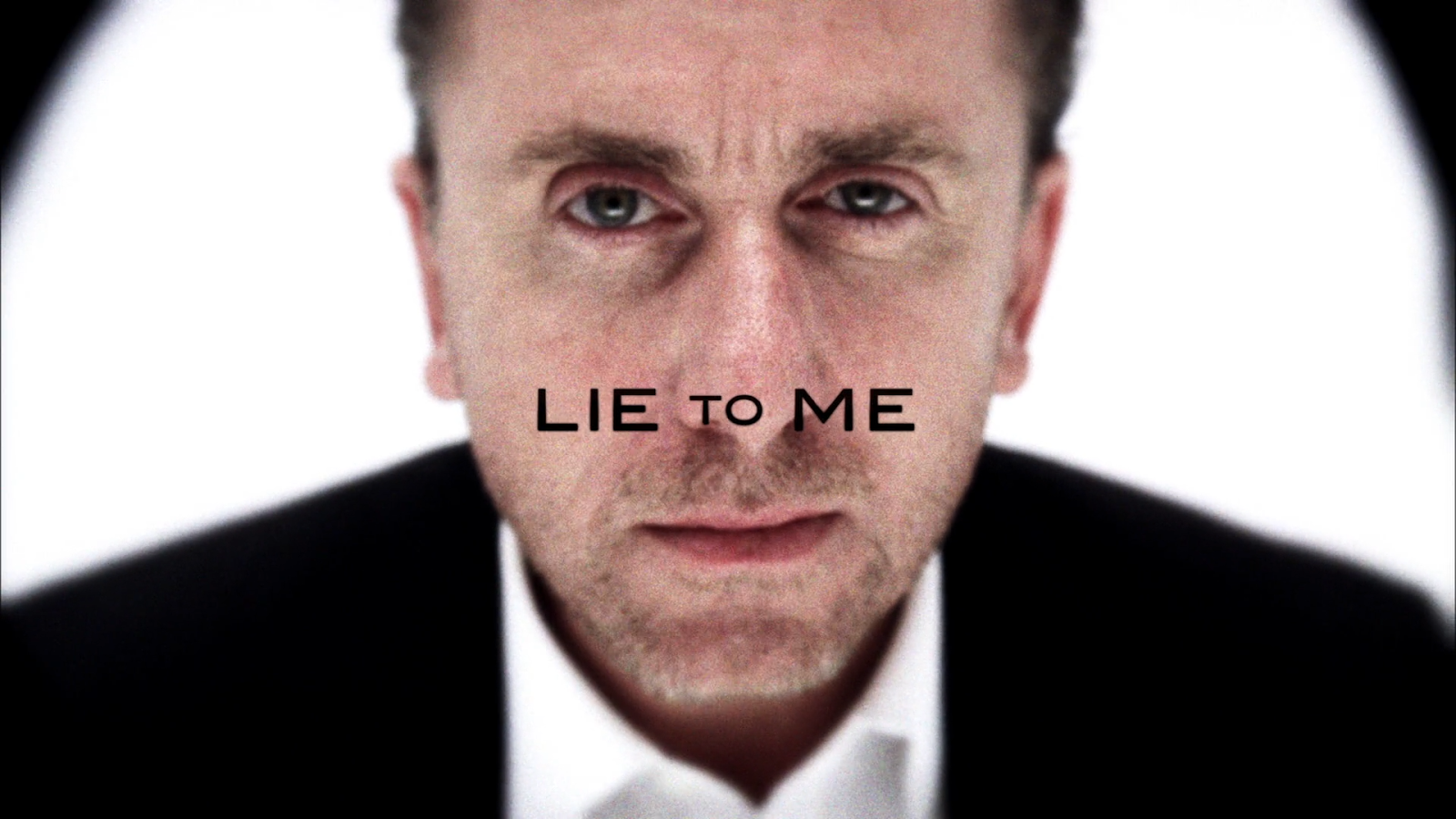
Leah was sensitive in asking whether it was difficult to talk about my past experiences. Reflecting on this, it gets easier the more that I do it, and honestly, it's not like a therapy session, so I don't end up crying all over her (I'm delighted to say, and I'm sure she's pretty pleased about that too!). I was saying to Mat this week that I don't want to become a broken record where depression is concerned. I do have other stuff going on. I'm most of the way through watching Lie To Me and contemplating The Good Wife and Scandal as the next box set-cum-Netflix-must-watch.

Bed bound and Netflix-addict. Thank you Tim Roth.

The difference in talking this time was that this was a recorded interview, rather than live. It was also a lot longer, so that my words can be chopped up into bite-sized segments describing my life experiences. I wonder how it will come out. I'm guessing about 20-30 seconds of content, so will be amazed if anything more is featured. That's TV, folks. They also took some footage of me 'doing something normal' for potential use in the segment.

Pete - awesome. Me - trying to look relaxed = not really relaxed!

Luckily the suggestion of me making tea was ditched in favour of me reading a book. I did make them tea - the poor two had travelled all the way from east London to Teddington and it took them nearly three hours. Perhaps a neat Scotch would have been more appropriate! But I don't drink it, or coffee. (I know, English, you're ENGLISH. Must drink tea...but I'm sorry to say that I'm letting the nation down, one de-caffeinated diet coke and orange squash, or glass of Veuve, at a time.)

 So we opted for me reading a book. I couldn't undertake this exercise in our personal gargantuan library without choosing my very favourite book, Possession, by A.S. Byatt. This is worth a blog in itself, or a book, or more, but suffice to say that I felt almost relaxed (almost) with a camera being poked in my face as I turned the page on cue and made sure I quickly moved on from a page where the (surely pre-watershed embargoed) word 'penis' appeared!

Time for a relaxing read. Just me and my camera crew.

 After all that time to get over here it was all worth it in terms of the tidying and cleaning. Everyone who sent me a get well card - look out for your cards in the background, and thanks again! You know what my favourite book is now, you can tell I need a manicure (possibly, if they use that shot) and I got to meet two great professionals - presenter and film expert - in the process. It just goes to say that depression can lead you to new and positive things. I really hope that the end product - to be broadcast on Tuesday 25th November to coincide with the Economist's "Global Crisis of Depression" conference. I believe we have to keep talking about this. But for now, I'll take a rest and wish you all a very healthy weekend. Get some rest and get out there if it's not raining...take care, most of all.

Camera lighting is very cool. Just saying.

Tuesday, 18 November 2014

Nothing Munch To Worry About: The Serious Cost of Mental illness

Whether he's hearing a scream, or screaming, there's definitely something to scream about

I feel bad about my own worrying. I mean, what do I have to worry about compared to most? Not only do I not have Ebola, but I'm not involved with the Band Aid umpteenth revival.

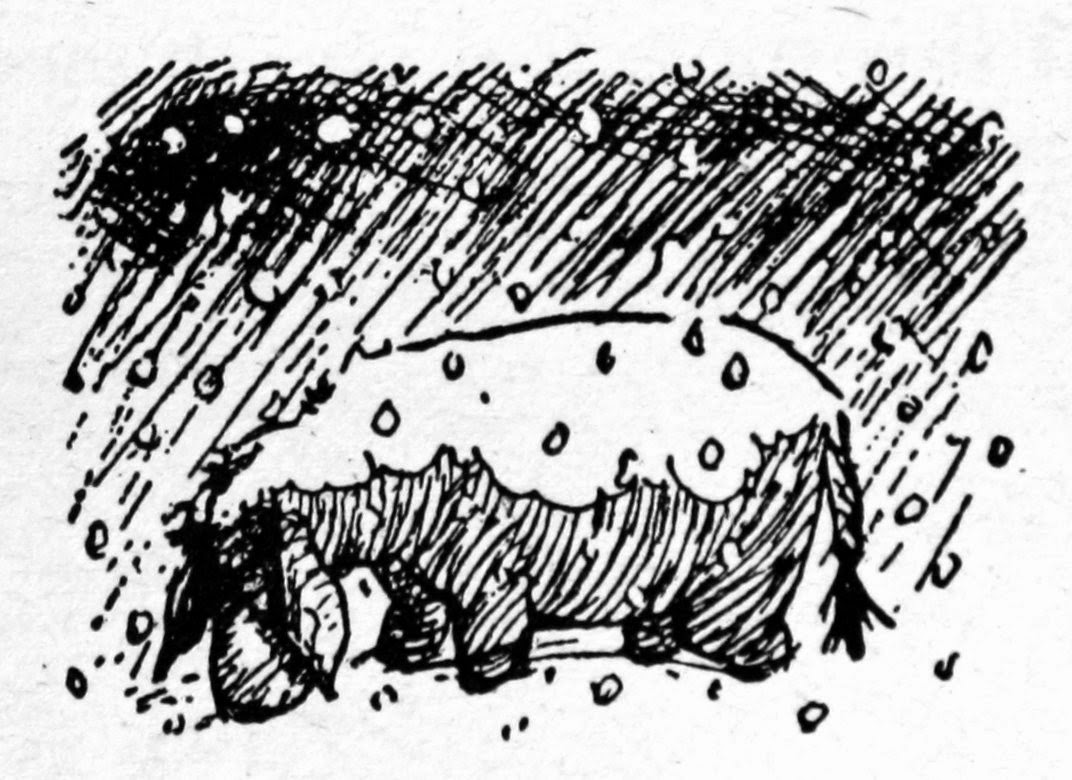
This week, in creative writing class, we had to write about something which interested us (no prizes for guessing what I chose), and then write a piece about it, using facts we found through research. Below is my offering. I think it's more Comment is Free than me, in terms of style, but I do believe that worrying too much is dangerous. Even if I am a first class worrier. And I'm going to try hard not to worry about that.

"It's snowing still," said Eeyore gloomily.
"So it is."
"And freezing."
"Is it?"
"Yes," said Eeyore. "However," he said, brightening up a little, "we haven't had an earthquake lately."

Worries are something few of us can say we’ve never experienced from time to time. In the past few years, worries have come easily to us Brits more than ever before as uncertainty abounds: the economic situation is insecure; we have – at best – a shaky government. 

At work, redundancies have been common and the future seems less sure than ever, which leads to money worries with little or no job security or secure future for ourselves and our families.

O, that this too too solid flesh would melt, thaw and resolve itself into a dew! - Sing it, Hamlet

Those retired from work are, for the first time in many cases, seeing their children in a worse economic situation than they were in themselves as young adults. Things are tough whether you’re eighteen or eighty, but no less so than for the working population, who are juggling national and personal challenges with one very full pair of hands. Knowing this, it can’t be a surprise that this might have affected how many worries the average person experiences, and only a step farther to understand that ongoing worries might lead to illness and absence from work.

In the UK, 1 in 4 people suffer from mental illnesses, myself one of those “ones in four”. Recently, the World Health Organisation has reported that four of the ten leading causes of disability in the US and other developed countries are mental disorders, and estimate that, by 2020, major depressive illness will be the leading cause of disability in the world for women and children[i]. 


Before this year, I had never taken time off work related to depression, despite having suffered from it at different points of my life during the last twenty or so years; when I did take time off work, I sometimes related my illness to other causes or sometimes I worked through my illness despite the debilitating nature of the condition on my sense of well-being. In this I exemplify another statistic: that university-educated professionals are less likely to take time off work when depressed, and, if they do, are reluctant to tell their employer the reason why[ii].


Talking to my friends and family members, it is amazing that the statistic is only one in four. Almost everyone I have spoken to has experienced some period of their life where worry has turned to stress or worse. But I never knew about their illnesses / worries before; and they never knew about mine. We were all keeping one big secret from one another.


Employers are required to support any employee returning to work after a period of illness, and to make what are called ‘reasonable adjustments’ during this time. In the light of our secrecy this is hard to fathom. Personally I just don’t know what a reasonable adjustment should be – maybe don’t mark me down as a failure at my job if my eyes tear up in the office one day? Treat me as totally normal is probably the best thing I can think of.

These reasonable adjustments, though, and more direct action to help workers suffering with some kind of mental illness, are imperative for employers to take action on. In Europe, depression is said to cost workplaces £77 billion annually, with the greatest economic loss coming through absenteeism and lost productivity, according to a recent report by the London School of Economics and Political Science (LSE), and King’s College London[iii]

Many employers have publicly taken steps to pledge their commitment to addressing mental health, through signing the Time to Change pledge to end the mental health stigma and by founding the City of London Mental Health Alliance. This is a start – and only a start – to helping employees know that the companies for whom they work want to support them (and this makes sense. It's not as if doctors have an instant cure; partly why there's so much mystery around mental health).


Further, employers are starting to focus on mental health as a priority topic among the other ‘inclusion and diversity’ focuses, and many like my own employer, have set targets to address mental health awareness and support within their own organisations.

None of this stops me worrying – well – a little, but no more, nor enables me to ditch the medication and the therapy for depression in one fell swoop. However, knowing the statistics tells me my employer has as much to be worried about as I do. It must act to resolve its own, similar worries about an insecure future and potential financial loss. It makes economic sense to do so. Organisations and their employees have to work together to keep going amid the uncertainties that we all continue to face. It remains to be seen which organisations (and employees) will embrace the challenge and come through it stronger.

Seriously, though, we need to worry less!

[i] http://www.nami.org/template.cfm?section=about_mental_illness National Alliance for Mental illness

Friday, 14 November 2014

Alice Threw The Looking Glass: Misconceptions of Mental illness and Depression - My Five Cents

“I'm not strange, weird, off, nor crazy, my reality is just different from yours.”-- Cheshire Cat

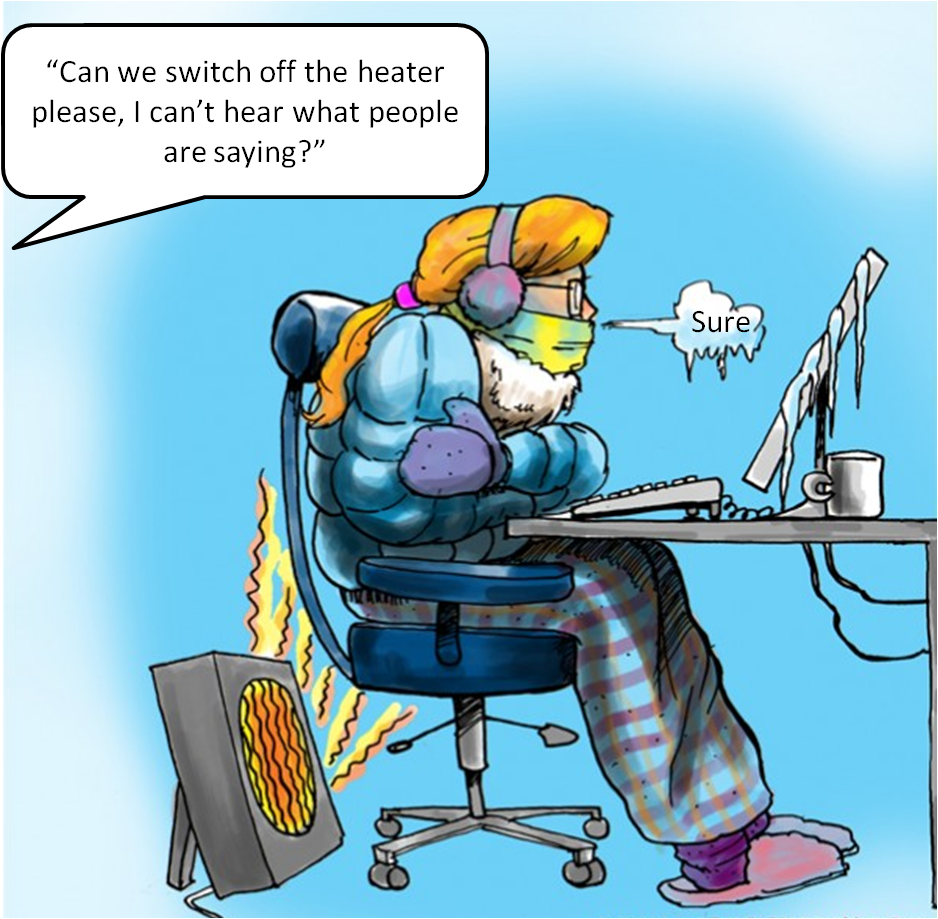
I joined a creative writing group last week, which is ever so conveniently located only moments from my front door, so even a broken soldier like me can shuffle along with my massive extra large Tesco hessian bag filled with pillows and cushions of various sizes to see me through the session. One for my arm, which is a pain (literally and figuratively) and aches in the cold, when I move it, when I don't move it...you get the picture; another two for my derriere and my back. It's held in a church hall where we have to choose between the heat provided by a tiny, robot-shaped electric heater in the corner - but no ability to hear what anyone is saying or reading aloud - and my usual experience of church halls which is: chilling to the bone, no matter how many layers you're wearing.

Heater on. Alive. Heater off. Dead but trying to listen anyway.

The course focuses on non-fiction and this week our home work is to research something 'we're interested in' and write a 'short' piece about it. We did receive feedback on our chosen pieces. I - predictably - opted for mental health in the work place to enable me to bang my apocryphal drum a little louder to a new audience. This provoked feedback from the teacher that I could of course choose several aspects of this - mental health in general, stress, depression, different eras of work. After three minutes or so of this feedback he considered himself satisfied and moved on.


I neglected to say that Mat is doing this course with me, and it was to him the focus of attention now turned. He explained, "There have been many popular science books addressing the figures and ideas from the scientific revolution of the 17th century aimed at mixing biographical details with scientific facts in a way that is both educational and entertaining. A similar project would envisage taking the ideas of figures at the time more usually considered as philosophers - Descartes, Leibniz, Locke, Spinoza, etc. - and looking at them and how their thinking was revolutionary...". To this the teacher said, "Yes, that sounds very interesting," and moved on. (Translation: "I've no idea what you just said but it sounds erudite and complex so I'll let you get on with it and I'm too afraid to ask for more details.)

(And don't be afraid to talk to Mat about philosophy. He'll keep explaining till you get it. I promise.)


This week mental health has once again featured quite prominently in the news. There have been several articles about depictions of the mentally ill on television - both in dramas (like Homeland and Eastenders) and in Broadmoor, a new documentary on the most severely mentally ill people in the UK, some so severe that they have committed terrible crimes and will never be able to be released, such is the gravity of his illness (it's a male institute). The latter programme was only made after five years of waiting and negotiating to be granted permission for cameras to enter the grounds. I watched the documentary and was afraid it was going to make people afraid of mental health again - thinking that everyone with some sort of illness related to mental health was the same as those depicted (though they varied in the degree of severity / type of illness). Let me clear this up right now. No - we're not all like that.

Carrie in Homeland has bi-polar disorder.

All of the above prompted much commenting in the UK online press, which led me to consider how I perceive myself in society, how I think society perceives me, and what I think the misconceptions are that I struggle with as a result of having (and now recovering from) a mental illness.

Here is a lovely cartoon of misconceptions of mental health, challenged. Then you can read mine.

Yep.

My top five pet peeves about conceptions of mental illness, from personal experience.

1. "Just get over it." Depression is a real thing, not something in my head whereby I can just 'Pull myself together' and instantly bounce back to my well self from. It also can't be cured in twenty minutes with the right medication. For me - and this is my opinion, not that of any medically qualified person - I need some help from medication at times combined with cognitive behavioural therapy (CBT) to help me to recover. Most of the time I'm fine. And I am trying to be better - all the time. I am not giving up and sometimes it's really bloody hard, thanks, even though you can't see the blood, I promise you, it is!

2. "Your can't possibly be any good at your job if you've got a mental problem." I can still do my job / function perfectly well when I am well (even though I've had depression in the past / still have it as a condition). I'm doing it now. I'm doing it part time, admittedly, because it just so happens that I fell, not down into the rabbit hole but down two stairs and have damaged myself severely so that I need to recover and rest.

3. "Medication doesn't work" OR "Medication is all you need." I need both medication and CBT as part of my recovery process. When I take medication because I need it to be well, I can also do my job perfectly well. And sometimes, yes, I do need medication. I need it to help me to rebalance my brain's chemicals somehow, in the same way someone with a cold needs Sudafed to help a congested nose feel better. It works for me. So I do it. and I trust my psychiatrist. Incidentally, there was some horrible psychiatrist trolling this week. "Psychiatrists aren't real doctors...BLAHBLAH". Really? Mine has several other previous medical qualifications and I can assure he is probably the most qualified doctor I've ever met. Finally, when I see a psychotherapist to talk through various topics that is part of the recovery process and does not mean I cannot do my job well.

4. "Depression is just like glandular fever, ME or Chronic Fatigue Syndrome." I do not have M.E. or Chronic Fatigue Syndrome I do have a symptom of depression which means that I become extremely tired by things that I find hard. I am a classic overachieving under-confident person, perfectly formed for the world of consulting, banking etc. As if hatched from a perfect consulting bird egg, here I am, ready to over perform but oh so unsure at times, and the need to over-perform - to have what is called 'unrelenting standards' of myself, makes me sometimes absolutely knackered before I've even begun. It's a bit like having to go and have a lie down at the thought of doing a little washing up, because you want to do the washing up the best, better than anyone has ever done it before, ever. Yawwwwn. Still, if you look at previous blogs you can see that I've gone running when I've been depressed, and delivered on some massive pieces of work while ill, so I really feel this is not the appropriate way to think of me.

Unpredictable emotions, and sometimes no emotions. 

5. "You're always smiling and laughing, you can't possibly be depressed." I can still enjoy things while being depressed. (Or I might be pretending to, true.) But this is a really odd one. I don't understand myself why sometimes I'm crying uncontrollably (well, except while watching 'Up' at Christmas, but then EVERYBODY is crying when they watch that movie) or why I'm laughing. I'm always laughing when Mat makes me laugh because he does silly things like balancing spoons on his head or pulling funny faces. Or I put Mat's copy of Locke's 'Essay Concerning Human Understanding' in the bin, again (hate, HATE Locke) and find this endlessly amusing. But the next minute I can feel the empty feeling inside, the tiredness, the stupor and feel stunned by it again, like a deer struck with a dart.

I laughed and laughed this week when a lunch with friends went from disastrous to hysterical. My friends, two sisters, both thought they were meeting me this week, but then it turned out both had a different date in their diary. I was faced with lunch with each of them on consecutive days, or neither and a future date in January. I suggested Wednesday, which - miraculously - worked out, although I couldn't eat as I already had a work lunch to go to. The restaurant in Waterloo we went to shall remain nameless. Oh, alright then, no it won't. It was Topolski's and it had possibly the worst service and worst idea of menu / timings I've come across in a long while. (I did live in New York, yes, but I'm back now to the reality of British service, and I know that it still, well, sucks.)

Topolski - great artist. Shame about the service in his namesake's bar.

(Them) Yes, we had to come to the counter to order [There's no one else here.]
(Them) No, we couldn't just have bread [Bread clearly existed in the place as it was served with other dishes.]
(Them) No, we couldn't have fresh mixed juice as the juicer was broken. [Losers.]
(Them) No, that part of the menu's only available after 5 and before 5.05pm. [Points to 90% of menu]
(Them) Yes, I can reheat your cold soups for you. [More waiting.]
(Me) Yes, I can tip you nothing and smile directly into your eyes while doing it you dreadful example of waiting staff everywhere.

Luckily we hadn't seen each other in yonks so we were chattering away happily as all these foibles went on around us.

Unfortunately all this fun means I need to spend more time this weekend doing more research on mental health. I've opted for mental health in literature and drama so watch this space for that. In the meantime, think of me changing all the time. That's what I'm doing. That's what we're all doing. Ageing, growing (in whatever way). We're changing. And since I wrote that I've changed again, somehow.

“I can't go back to yesterday because I was a different person then.”