Caring in practice. A friendly hug is a wonderful thing
(Image copyright Jessica Florence)
I’m off on my travels again, this time to New York for a
wedding and then after a brief stopover at home, on to Poland. As I’ve mentioned
before in this blog, much of what I am trying to apply against my type is to be
able to recognise when I need care and take whatever steps are necessary to
provide it.

Find out more and pledge to contribute to caring in your own neighbourhood, here
This week is Carers' Week, so I've been thinking a lot about this topic. I'd like to honour all of my carers, the mental health professionals. Without all of these people and my beloved husband, family and friends I might not be here today to write this. I'm grateful to all who have taught new things about how to recognise negative thought patterns and
how to try to apply these skills to troublesome times where all my unhelpful
skills at over thinking, rumination and comparisonitis come into play with a
fervour which could win awards. The fact is, we can't survive unless we care for each other.

However, for this blog, I would like to focus on two people –
one I value above all others: my husband, and one I value much less and should probably
attempt to value more: myself.
I’ve nearly been with my husband for ten years, and plan to
post more about the fantastic ten years we have spent together. As with all
relationships, we do of course have the occasional argument, about whether he
should really be touching the kitchen knives given his propensity to cut
himself badly by scarcely grazing the blade, or whether it’s really necessary
to buy another book to add to our currently building-foundations-endangering
collection…(No.)

Mat and me. Just two hamsters taking care of each other. In pots.
When we began to go out many years ago it was clear to me
that this was a relationship unlike any other in my previous experience. We
agreed since the start of principles of sharing bills and building a
partnership. We both earned a similar amount when we started to see one another
and wanted to build a relationship based on equality in sharing the restaurant
bills, the cinema tickets, and over time, our living space from rented
accommodation to our first bought house.

True love. Except Mat didn't have to wear the hat.
Probably for the best, he would have sat on it or something.
And even in our wedding (under sufferance!) my poor love forced himself through about a billion conversations with me about how our perfect day
would truly be ours. He isn’t interested in clothes or shopping of any kind so
to become involved in things such as wedding planning or even buying a new pair
of jeans could not be farther from his interest level. A good book (or even a
mediocre one), a nice cup of tea and a lovely piece of fudge would be his
preference over any shopping-related activity.
I suppose our romance was something of a whirlwind after the
initial total non-start (to be explained at length in another post to celebrate
our 10 years together). We moved in together after 6 months and have been firmly
by one another’s side ever since.
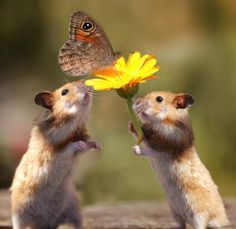
(Don't worry, I'm the one holding the flower in case
Mat drops it and the poor butterfly gets hurt!)
At the beginning of our relationship I had just signed up to
a tough intensive teaching and leadership programme which caused me a lot of
stress, fatigue and money worries, as well as all of the amazing things that I
experienced while working with some of the most brilliant students and
excellent teachers and leaders. After only three months of dating, I was at the
GP broken with tiredness and physical as well as mental symptoms across the
board, such was my extreme struggle to keep going and maintain my job, do it
well, maintain my (new, London) personal life and fit in some time now and
again to live my new life in London.

Mat didn’t initially seem to understand (fully, at least) that I
needed to take medication to continue to be able to function, work. He said he
didn’t really agree with taking medication for depression, and initially had a
hard time accepting it as something that required anything more than (every
depressive’s least favourite phrase) “Pulling yourself together”. It was a real
struggle at the time. I myself never wanted to be on medication for my
depression. I preferred to not pollute my body with medication that had no guarantee
of working, was still in the process of being developed. I also hated the fact
that every single one did (and still does) give me ridiculous side effects that
mean I take more pills to cope with them just to be able to keep taking the
depression medicine. Ridiculous!

All that, and the fact that we were in the first stages of
being together, where we hadn’t known with the wisdom of hindsight, but only in
the first flush of true love – that he wouldn’t leave me realising that I was a
difficult case…someone with difficult, heavy, unwieldy emotional baggage connected
to (at times) acute mental illness. I think it would be fair to say that Mat
didn’t understand depression the way that I did, because he had never
experienced it to such a long degree, with so many bursts of down periods and
my inability to get myself out of bed, take an interest in seeing museums or
going on walks. I am so lucky that neither of us gave up on one another. I (as
insecure as I was) knew how much I loved him and wanted to keep him at all
costs; but the other part of me wanted to be honest In our relationship, and I
knew that It was ever going to work out between us than I needed to be honest
about an illness which I expected (and have been proved right) never really
goes away forever, at least not in the last two decades.

Here we are, ten years (just a few days short) and counting.
My lovely Mat has now had nearly ten years of experience living with me in my
highs my lows, my delights and despairs, and my sloughs of despond. Many, many,
sloughs of despond. (Which you would think would be attractive and interesting
given the onomatopoeia of this phrase. It’s not. At all.) Because he understands depression and anxiety – at least
from my point of view – he accepts that depression is a multi-faceted and
complex illness; it doesn’t mean I can't get through a full week of work, see
friends, run, walk, socialise (a bit, only at the moment but still…). He can
make me laugh seconds after I’ve been in tears, and I can go and have a
perfectly nice afternoon only to come home and need to retire because the whole
social activity or the very act of going out has left me feeling totally defeated
and exhausted.

So how does it work for us? I cannot express here in a
single post how much Mat does for me. He makes every effort, in every area of
our lives, to try to make my (at times) unbearable life worth carrying on. He
loves doing things for me, and – I guess – that when he doesn’t love doing
them, when he is actually wishing I could just be better or that this whole,
boring and difficult stage of our lives could be over and I could be content,
reading, writing, painting…shopping even…But he does carry on. He tells me here’s
there and always will be.

Well all right then. I think I can make that work.
He emails me, tweets me, messages me pretty much every day
while we’re both working, or if I’m at hospital appointments, to ask how I’m
doing and send me things that cheers me up. When I can’t get out of bed he
comes to see me, to kiss me and hug me and tell me, as I rest in bed shutting
the rest of the world out, that there will be a better day to come and that I
should accept that there are bad days, but they are not all bad.

In my darkest periods over my last few months I’ve stayed in
bed many, many times all day. I’ve got up, showered, dressed and eaten, but
just barely, from bed. I’ve cried after he has come home because I’ve been
lonely and sick of myself. I’ve cried during social functions and we’ve had to
beat a retreat or try to let Mat hold my hand and help me get through it. He
notices. He holds my hand and looks at me without talking. He has told me again and again that he loves me and
even though I find it hard to believe myself to be worthy of love quite often
he persists. He seems to think I’m work it. And I am so grateful for this love
which seems boundless.

I still quite believe it but I work on telling myself what
he tells me, and get a little bit closer to believing in it, and recognising
how amazing our life together is – despite the challenges I bring with my
depression. He cooks, cleans the kitchen when I can’t, brings me flowers, buys
me glasses of Prosecco and mini burgers or hot dogs because I adore them. HE truly
is the most wonderful person in the word, and the fact that I spend every
single day unsure of how I will feel is a massive burden on him to cope with
all my mood changes, free-flowing tears without warning. (Especially in restaurants lately. Yes, I've become a restaurant crier.) And repetition of how
bloody hopeless the whole thing is, and how I can’t go on (or don’t want to) and
more.

Beware friends. I now do this ALL THE TIME.
Don't say I didn't warn you when I start blubbing over the bruschetta.
Now in return I do things for Mat – because we are still
very much a partnership. I’ll buy takeaway for us and take us out regularly to
say thank you to him; I’ll paint and write him little cards, give him the
sugary treats I know he loves (M&S ginger men and any kind of hand-made
fudge are particular favourites), And I tell him that I love him but I would
understand if he would leave. And he stays. It’s a miracle to me that he does.

The second topic I wanted to cover here is caring for myself
(or self-care as we in the mental health area often call it). When it comes to
this my ability to provide appropriate self-care for myself, for someone who
has unrelenting high standards I’d say I perform pretty awfully in this
respect. The fact is, that we are all responsible (as far as we can) for
looking after ourselves and making sure that we can exist and survive
adequately, and – if we’re lucky – happily.

"Who me? I need to care about myself too? I totally forgot about that."
The fundamentals of what I should be doing for my self-care
are to keep myself fed, clothed, clean and get enough sleep to function. Largely
I manage to do these things, simple as they may appear. On terrible days I will
often (now, as I become more self-accepting) call an achievement something like
getting up, showering, washing and drying my hair. Those small acts on terrible
days where I am drained, tearful, and devoid of hope might exhaust me, so the
right thing to do for myself at that point might go to bed and rest some more –
distract myself from my wretched thoughts with sleep, reading, watching Netflix
box sets (particular ones…probably another post to come about what I can and
can’t watch at these times).

Eat and sleep as well as you can.
I find drinking fresh juices helps to reduce my anxieties.
If I can do it I care for myself by creating a nice space to
be in – fresh bedclothes, fresh air, walks, cleaning the house (which is good
exercise and good for the process of seeing things become clean and tidy when I
long for order from my disordered, hectic and unrelenting mind.
There are other more complicated steps I know I have to keep
practising (in both senses of the word) to take care of myself. I’ve learned
(and continued to learn) to be more honest about my health on a day to day basis
both with my husband, whose care and love I cherish above all else, with my
work colleagues, with my mental health support professionals, and to a degree
(using the assertiveness techniques I’ve learned) with everyone I meet.

For me, working towards self-care is not trying to make
everyone like me (which I usually do). Not trying to make it my role to be the
heart and soul of the party, exhausting myself (and probably everyone else) in
the process so that everyone ‘has a good time) and I’ve clearly made an effort
to be a good party attendee. It’s also about not telling myself off every
second, well, second about something I’ve done that’s not been right in the
past – like the time I shouted at Mat when I shouldn’t have, or the time I drank
too much wine and fell asleep on the sofa at a guest’s house, drunk. If an
elephant never forgets then I sure hope that particular species of pachyderm
doesn’t have a propensity for depression, because my memory is never as razor
sharp in its accuracy when I’m remember and flagellating myself for past
wrongs. If there were awards for self-loathing and self-reproach, I feel sure I’d
be a contender for the top spot.

Every day I just care for myself as best as
I can, and some days I’m better at it than others. Mat helps me –
every day - and I am so lucky to have him in my life in the first place, on top
of which he is the most loving and giving soul to this mixed up, messy woman. And
I want to care for myself because I’m working towards feeling like I deserve it
– because I know I would always tell a friend or loved one that they were. You
are worth caring about. You are worth caring for. You are special and even if
it’s hard to see it, you have a place in this world. I will try to read this
post again so I can remind myself that what I would tell others probably
applies to me to. Till next time, please all take CARE. x